
Let’s face it: standing in line for the Zion shuttle is probably not the way you want to spend your time at Zion National Park. Zion continues to draw record-breaking numbers from all around the world as one of the most popular U.S. national parks to visit (with an astonishing 3.6 million visitors in 2020). This means that if you arrive at the park after 8 a.m., you may have to wait for an hour or more simply to take the Zion Canyon shuttle.
Fortunately, you may still see the greatest of Zion National Park without using the shuttle, such as climbing Angels Landing and The Narrows. The following are the best hikes, sights to view, and things to do in Zion that do not need the use of a shuttle.
What is the Zion Canyon Shuttle?
From March to November, a shuttle service departs from the Visitor Center and transports guests to higher Zion Canyon along the famed Scenic Drive. The trailheads for Angels Landing and The Narrows, as well as access to the Emerald Pools and Zion Lodge, are all located in Upper Zion Canyon.
However, as Zion National Park’s popularity develops, queues to take the shuttle get longer and longer. I slept at Watchman campsite inside Zion National Park in 2015. We started our day about 8 a.m. and waited for about 45 minutes to join the shuttle… I can’t image the length of the shuttle lines now, especially during peak season!
If you’re planning a vacation to Zion National Park soon, it’s critical to understand how the Zion Canyon shuttle system operates so you can get the most out of your visit!
Read: Is Traveling A Hobby? The Ultimate Guide To An Exciting Way Of Life Learn about the Downsides Of Traveling As A Hobby
1. Hire a private shuttle
A private shuttle service into Zion National Park is available from a number of firms.
Without having to wait in line for the shuttle, this is a terrific way to go to Angels Landing, the Narrows, and Emerald Pools. This saves you time not just later in the day when you have to wait in line to ride the shuttle back to the park entrance, but also earlier in the day when you have to wait in line to ride the shuttle back to the park entrance. The average cost per person is $40.
2. Rent a bike
Biking is the next best option for getting to the Narrows and Angels Landing hiking routes. The following are the one-way distances from the Visitor Center to the trailheads:
EMERALD POOLS: The trailhead for the Emerald Pools is 4.4 kilometers from the Visitor Center. The Zion Lodge and the Zion Lodge shuttle station are also located here.
ANGELS LANDING: The trailhead for Angels Landing is 5 miles from the park’s entrance/Visitor Center. Bike parking is available at the Grotto picnic spot. This is also where The Grotto shuttle stop is located.
THE NARROWS AND THE RIVERSIDE WALK: The Riverside Walk and the Narrows trailhead is located at the very end of Zion Canyon Scenic Drive (the Temple of Sinawava). It takes 8 kilometers to get here one way.
Note: You may also walk to these trailheads, but it will take a long time. It’s a 5.4-mile trek to Angels Landing, plus a 10-mile out-and-back along Scenic Drive.
3. Go on a hike to the Canyon Overlook
This is one of Zion National Park’s greatest and easiest walks. You won’t need the shuttle to get here because the trailhead isn’t on Zion Canyon Scenic Drive. Canyon Overlook is one of Zion National Park’s most beautiful overlooks. You can see the twists and turns of the Zion – Mount Carmel Highway and Zion Canyon from here.
The trailhead is located immediately east of the tunnel on the Zion – Mount Carmel Highway. Because the parking lot is limited, keep your fingers crossed that you’ll be able to get a spot.
4. Go for a hike in the Watchman Trail
The Watchman Trail provides scenic views of Springdale and Zion National Park’s southern edge. There is no need for a shuttle because this trek begins immediately at the tourist center.
5. Go for a hike in the PA’RUS Trail
The Visitor Center and Canyon Junction Bridge are connected by this paved route. It runs parallel to the Virgin River. If you want to take in the view from the Canyon Junction Bridge, this is a lovely route to hike.
6. Drive via the Zion Mount Carmel Highway
The Visitor Center is connected to the park’s east entrance through this meandering beautiful route.
Stop for photographs along the switchbacks, which provide spectacular views of Zion National Park. Continue driving through the park’s stunning vistas on the east side, passing via the Zion – Mount Carmel Tunnel. Bighorn Sheep should be avoided.
7. Go on a hike to the observation point
The views of Zion Canyon from Observation Point are unrivaled. The best way to reach here is via the Weeping Rock trailhead…however, because to a rockfall, this trailhead is blocked. You must use the shuttle to get here because it is on the shuttle route.
There is, however, another method to go to Observation Point.
Observation Point is a 7-mile round-trip walk from the East Mesa Trailhead. Outside of Zion National Park lies the East Mesa Trailhead. You’ll park just outside of Zion National Park and then take the East Mesa Trail inside the park. It’s really a quicker and simpler trek from the East Mesa Trailhead than it is from the tour.
8. Visit the Kolob Canyons
To the north of Zion Canyon Scenic Drive lies Kolob Canyons, a minor portion of the park. There are a few hiking paths in this region, as well as a tourist center. This is a nice region of Zion to visit if you want to escape the crowds along the shuttle route.
9. Go for a hike in the subway
The Subway, like the Narrows, is a hiking and canyoneering path along North Creek’s Left Fork. It is located on the park’s west side, and there is no need to take the shuttle to get there. You will, however, require a permission.
10. Go for a tour in the Zion
Consider taking a tour to go hiking, rock climbing, or canyoneering in Zion National Park instead of using the shuttle. This excursion combines a UTV tour with a trek through a slot canyon for those seeking excitement. Alternatively, go on a guided trek through the Narrows. Canyoneering, horseback riding, and a Jeep trip of east Zion are additional options.
Things to keep in mind before visiting the Narrows
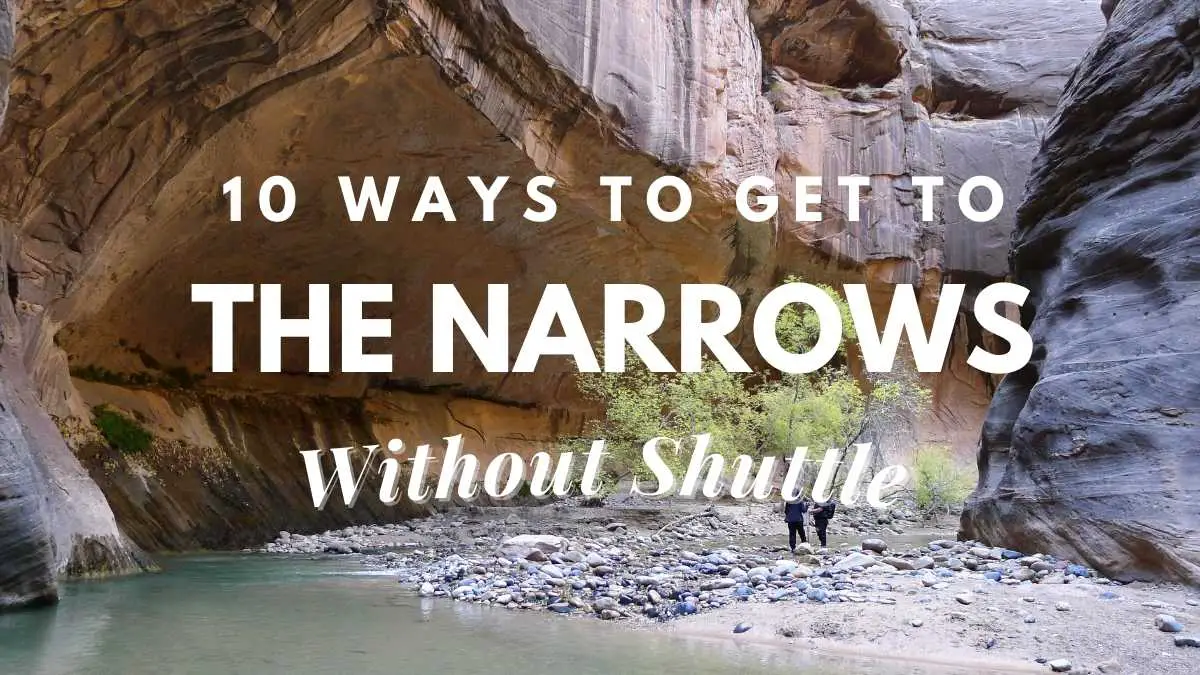
The Temple of Sinawava trailhead in Zion National Park is where you’ll find The Narrows. To enter Zion, you’ll need a park pass, which costs $35 per car. This pass is valid for one week of visits to Zion National Park. Currently, only shuttles are authorized to drive up the road that leads to the trailhead. As a result, you’ll have to park at the Visitor Center, which is at the park’s West Entrance, which is closest to Springdale. The Visitor Center, which is located within the park, has its own parking lot. If the park’s parking lot are full, you can park outside the park and walk over.
Take the Zion Canyon Shuttle from the Visitor Center to The Temple of Sinawava trailhead and exit at shuttle stop #9, which is the last stop. It takes around 45 minutes to go from the Visitor Center to the trailhead via shuttle. I strongly advise being on the shuttle by 8 a.m. to begin your hike no later than 9 a.m.
The shuttle pass ticketing service has been withdrawn as of June 2021. The shuttle service is currently on a first-come, first-served basis. Due to Covid requirements, you had to book shuttle tickets for a specified day and time in the past, but those limits have already been eliminated.
Another alternative is to schedule a shuttle through an outside business like Zion Guru, which is allowed to enter the trailhead road. This option is more costly, with a roundtrip ticket costing around $40 per person, but it’s a terrific way to escape the Zion Canyon Shuttle lineups.
When you arrive at the trailhead, look for signs directing you to The Riverside Walk route. The first mile of The Narrows trek is on this trail. The Virgin River’s entry is easily accessible through the Riverside Walk.
How difficult is it to visit the Narrows?
Depending on how far you walk, the trek is simple to moderate. The Narrows is an “out and back” path, which means you may trek as far as you like and then return the same way. The Virgin River runs through the trek for the bulk of it, and the farther you go into the canyon, the more difficult it becomes to traverse between the boulders. What I didn’t realize before going was how much the terrain changes during the trip – you may be stepping over little pebbles one minute and hiking over larger ones the next. Throughout my whole journey, which was nearly 9 miles roundtrip, I saw children and individuals of all ages.
The Riverside Walk section of the path is ideal for those seeking for a short, easy trek. The trail is paved for the most part and does not require swimming. Some hikers only go for the 2 mile roundtrip Riverside Walk.
The water level varies during the journey, but you should expect it to be somewhere between your ankles and your waist. Depending on the time of year you come, it might be deeper or shallower. It didn’t get beyond my thighs when I went in early September. There are places in The Narrows where you can swim, but we won’t be traveling that far on this trip.
How long does it take for you to get to the Narrows?
The Narrows is a 16-mile stretch of water that can take up to 12 hours to cross. Most people, however, do not go that far. Expect to trek 9-10 miles roundtrip for the greatest experience, which I’ll go into in the following part. This will take you around 6 hours round way. Stopping for photographs and taking pauses for lunch and snacks are all examples of this. Remember that walking back takes less time because you’re not stopping as much to snap photographs.
Important things to know about the trail
The trek begins with Riverside Walk, which follows the Virgin River for the first mile. It will bring you to the Virgin River’s entrance after a mile, when the true hiking begins! The rest of the trek will be largely through the river at this point.
The canyon grows narrower and narrower as you travel further out, and the vistas get more stunning! You don’t want to miss these gorgeous areas of the trek, so pay attention to the following elements for the best experience at The Narrows. We were on the verge of turning back before this, and I’m glad we didn’t!
You’ll keep going until the canyon walls start to darken and get narrower. Before this point, you’ll notice folks turning around, but don’t be disheartened; keep going! It took us approximately 3.5 hours to get to the first dark, narrow section of the route – you’ll know you’ve arrived when you see it because it’s breathtaking.
Continue going for another 10 minutes or so until you get to a fork in the path, at which point you should choose the right branch. You’ll be in a very tiny slot canyon where you’ll have to climb over a little waterfall if you pick the right route.
Final words
The best thing about Zion Outfitter is that it’s only a 5-minute walk from the Zion Park West Entrance. They’re really within walking distance of the Visitor Center, where the shuttle takes you up. I suggest parking at the Visitor Center and heading over to Zion Outfitter to pick up your rentals before returning to the Visitor Center for your shuttle.

Proud owner of https://travelyouman.com/


Wow very informative 👌