
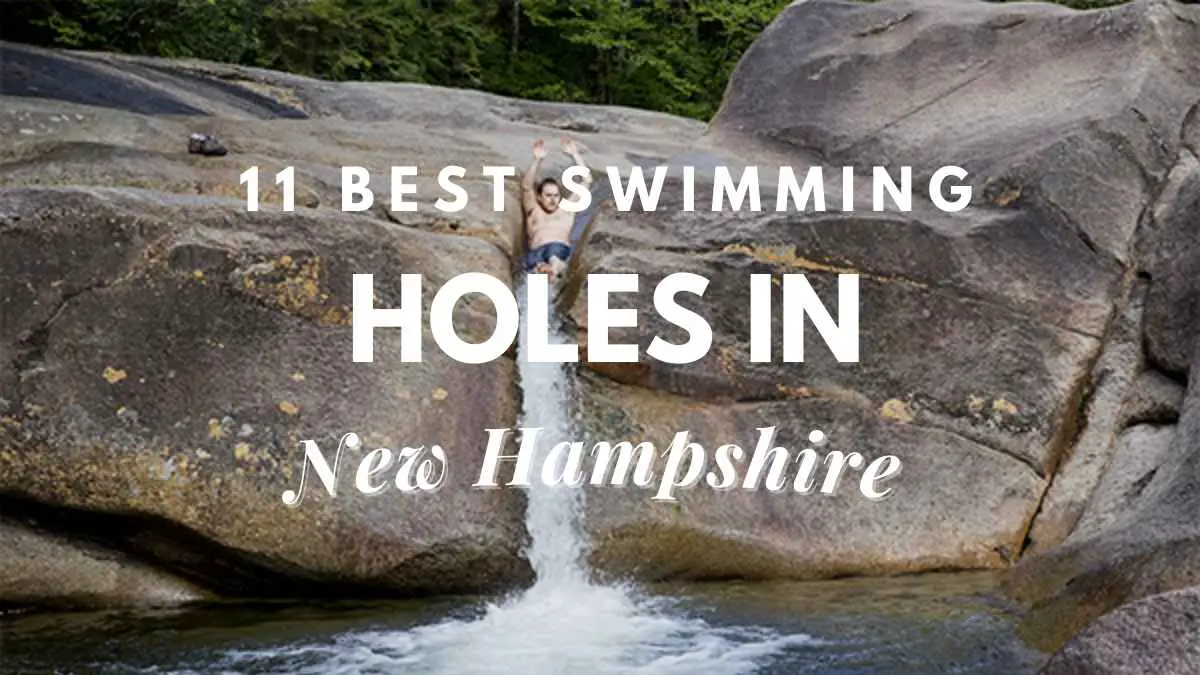
New Hampshire is renowned for its beautiful mountains and countless picturesque roads, but it also has a variety of unusual swimming opportunities! If you are looking for the best swimming holes in New Hampshire, you are at the right place. Continue to read this article, and we will impress you with a list of the greatest swimming holes that you can find out there.
Summers in the northeast are often filled with barbecues, fireworks displays, and beach days. Because New Hampshire has just 16 miles of shoreline, residents and tourists must be resourceful in order to find refuge on hot, humid days. Fortunately, there are enough of waterbodies (over 1,000 lakes) in the Granite State to satisfy anyone’s thirst. However, if you want to consume the water, it is advised that it be filtered. First and foremost, safety!
These are the 11 greatest swimming holes in New Hampshire, whether you’ve just climbed 2,000 feet in elevation on difficult terrain or are seeking for a roadside swim near to a covered bridge. But keep it quiet – don’t let the secret out!
1. The Baths of Diana
Diana’s Baths is a popular White Mountain destination, particularly on holiday weekends, due to its short climb and easy access from town. It’s a great option to the resort pool since it’s within a few minutes from downtown North Conway (a must-see location in and of itself!). This is a spot where even the tiniest swimmers will fall in love. Parents may relax knowing that their children will not be slipping down a waterfall.
There is, nevertheless, a waterfall, or numerous waterfalls. Along its 75 feet of vertical height, the area contains a few stages of wading pools and flowing waterfalls that will please almost any visitor. Just remember to pay the $5/day trail charge or use your American the Beautiful card at the trailhead.
Read: Is Traveling A Hobby? The Ultimate Guide To An Exciting Way Of Life
Learn about the Downsides Of Traveling As A Hobby
2. Franklin Falls Mill City Park
Mill City Park in Franklin Falls is still under development, but it’s deserving of a spot on our list. It’ll open later this summer, but the whole project is expected to be completed in late 2022. The Park is nestled in an ancient mill town and is New Hampshire’s (and New England’s!) first whitewater park. For kayakers and whitewater fans, it puts New Hampshire on the map.
Mill City Park will eventually contain wading pools and water play facilities for children. Tent and cabin camping will be available, as well as bike tracks, an amphitheater, and hiking paths. Yes, there are whitewater waves and features all along the river.
3. Emerald Pool
There have been debates over the years over which state Emerald Pool is located in, although it’s easy to see on a map that it’s New Hampshire. The pool is about 0.8 miles from the start of the Baldface Circle Trail and is known for its beautiful emerald green (duh). The water is frigid yet delightful since the pool is supplied by winter rainwater.
However, this place has a history of being a “clothing-optional” swimming hole (which is now outlawed). On a crowded summer day, you’ll probably want to avoid this location due to its limited size. To avoid the heat and crowds, swim on a weekday or early in the morning.
Read: Where To Swim In The Catskills (8 Best Swimming Holes)
4. Falls is number four.
Swiftwater Falls is regarded as the archetypal New England swimming place. It has exquisite, flowing waterfalls, a large pool at the bottom, and a background of a covered bridge. It doesn’t get much more beautiful than this!
New Hampshire’s waters are freezing for most tourists! It’s almost too chilly to spend any significant amount of time there. Fortunately, since this section of the Ammoniac River faces southwest, it rapidly heats up from the hot summer sun. Make sure to bring some Fluffernutters for lunch to complete your New England adventure – if you don’t know what I’m talking about, here’s a little primer.
5. Rattle River Falls
There are various swimming areas along the Rattle River, so you won’t have to deal with crowds. It’s also one of the less well-known swimming holes on the list, but it’s just as lovely as the others. Whether you’re a thru-hiker on the Appalachian Trail or simply out for the day, the banks of the Rattle River are ideal for a little lunch and a brief dip in the cool water.
6. Lakes of the Clouds
These lakes are known as “Lakes of the Clouds” for a reason. They are just 1.5 miles from Mount Washington’s top, which is noted for being clouded in practically every day. The Lakes of the Clouds are made up of two lakes, the smaller of which is somewhat warmer and shallower than the bigger. That, however, is relative. It’s still an alpine lake, and it’s DEFINITELY below freezing.
However, you may need some arousal after ascending to the peak of Mount Washington. If you’d rather keep dry, stop at the Lake of the Clouds Hut for a snack (and perhaps some coffee).
7. The Smarts Brook Trail
You begin your 1-mile trek to the Falls by passing through a lovely forest that never quite opens up. Although the falls are mainly hidden, rays of sunlight filter through the foliage and illuminate the magnificent green water in the ten-foot deep pool. For adrenaline enthusiasts, there are many rope swings near the water’s edge. Just don’t attempt to slide down the cascades; there are some sharp rocks at the bottom of the falls that might inflict serious injury.
8. Franconia Falls
Our sequence of falls requires a bit more work than many others on this list. The walk to Franconia Falls is slightly over three miles one-way and barely ascends 400 feet. So, although the hike to its goal is longer than normal, it’s a simple walk.
It isn’t the most spectacular waterfall, but it more than makes up for it in functionality. Several smooth, cut granite slabs are ideal for sunbathing or watching your friends in the water. The river is littered with pools of all sizes and depths. There are even two excellent, natural waterslides — however the river must be at a low enough level for them to be seen. The finest of these waterslides is around 20 feet long and located towards the foot of the most prominent falls. You’ll feel as if you’re sliding down a water slide, so keep an eye on your wedgie after you’re through.
9. The Falls of Jackson
This is without a doubt one of New Hampshire’s premier swimming places. This also implies that it will be inundated with visitors. Fortunately, Jackson Falls has one of the longest cascades in the United States, so there is enough of space for everyone. There are many pools to wade in, as well as granite slabs to sunbathe on. Perhaps you need to dry your clothing after being shoved in by a friend. Head to the Lower Falls by strolling up the road across from The Wentworth Hotel for a more peaceful experience. However, be aware that the current at these falls is generally stronger and may quickly fatigue even the most experienced swimmer.
10. Natural Area of Sculptured Rocks
Over thousands of years, the Cockermouth River built a tiny valley with a beauty unlike any other. Sculptured Rocks Natural Area will leave you speechless for the duration of your stay – just don’t drink too much water.
Swimming should only be done in the water when the water level is low. When the water level is too high, the current may be quite powerful, pushing you against the canyon’s tiny rock walls. You are swimming at your own risk! Because this swimming hole is part of the New Hampshire State Park system, there is a cost to enter.
11. Near Humphrey’s Ledge on Saco River
While North Conway and its various swimming holes are popular with visitors, Humphrey’s Ledge is further off the main path. There are various hiking paths that will take you to the top of Humphrey’s Ledge, where you will be rewarded with breathtaking views. If it’s a hot day in the White Mountains, though, you’ll want to spend the most of your time on the Saco River.
You may also go to Diana’s Baths first to avoid the crowds, then go up the road to Humphrey’s Ledge Recreation Area.
Final words
Now you are aware about the best swimming holes in New Hampshire. Before you get into any of the swimming holes, it is important to be mindful about your safety. On top of that, we encourage you to be prepared when you are visiting the swimming holes as well. Then you will be able to end up with securing the best possible experiences that you can secure from swimming holes in New Hampshire. You will also fall in love with the great experiences that the swimming holes can offer in the long run.

Proud owner of https://travelyouman.com/