
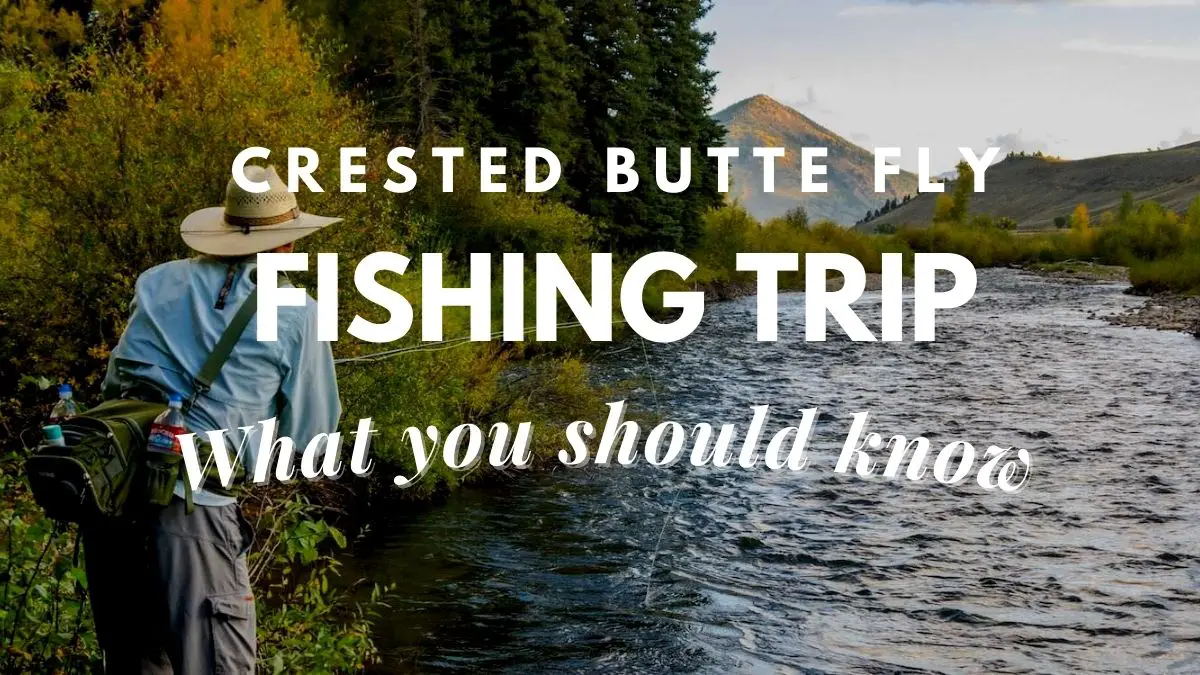
Fly fishing in Colorado’s Gunnison Valley and Crested Butte. It is not surprising that Crested Butte, Gunnison, Almont, and all of the Gunnison Valley communities offer some of the greatest fishing in Colorado given the two million acres of public property positioned surrounding the headwaters of one of the major river drainages in the state. Whether you prefer multi-day backpacking trips between alpine lakes or float fishing from rafts, casting a line in the Gunnison Valley nearly always yields a catch.
Going with a guide is one of the best ways to maximize your experience and get on the fish here. To get started, look through the pages of our partners to find local fly shops and tour operators. A fly shop is an excellent place to start your trip if you want to learn about the local hatches’ evolution and acquire a decent starting point.
This list is by no means comprehensive. Given the size of the Gunnison Basin, it is likely that everybody of water you see on the map contains fish. The Cochetopa, Cebolla, and Lake Fork drainages are also worthwhile excursions if you’re staying in Gunnison. Continue to read and you will be able to learn more about Crested Butte fly fishing.
1. Roaring Judy Fish Hatchery ponds
One of the greatest and simplest places for kids, families, or anybody who needs car-side access to fishing is the Roaring Judy Fish Hatchery ponds, which are a few miles south of Crested Butte and before Almont. If you’re searching for some flowing water, there are several opportunities to access rivers nearby.
Read: Is Traveling A Hobby? The Ultimate Guide To An Exciting Way Of Life
Learn about the Downsides Of Traveling As A Hobby
2. Nickel River
The Gunnison is usually an excellent place for a short catch or a full day of fishing because to its many entry sites and plenty of float fishing guides. For the majority of the river north of Gunnison, hiring a guide is your best bet for catching fish on the Gunnison. You may walk-wade fish a sizable portion of the river above Blue Mesa Reservoir by using the access points at Cooper’s, Beaver Creek, Willow Creek, and Neversink in the Curecanti National Recreation Area.
Early in September, kokanee salmon begin their yearly run up the Gunnison and East Rivers. These fish may be caught with big red nymphs and wet-fished Royal Coachmans. Later in the season, angling for eggs behind big salmon schools may produce some very opportunistic trout.
3. Taylor River
Because of the Catch and Release part just below the dam, the Taylor is perhaps our most well-known fishing river. The remainder of the river is likewise excellent for fishing and has reliable releases that make it simple to forecast flows. This river is categorized as easy since it is easily accessible from highways, although during the summer months, crossing it may be quite challenging. Be mindful that attempting to locate a location to cross so you can fish on the other side makes this situation more challenging.
There are many reports of magnificent and promising fishing along the Taylor River, which runs from the reservoir bearing its name to the junction of the East and Gunnison Rivers south of town. Large stones line this section of the river, which slows the flow and creates areas that Cutthroat and Rainbow Trout are known to like.
However, fishing the stretch of the river north of the reservoir is considered to provide some of the greatest high-altitude stream fishing in the state and is reported to be teeming with Brook Trout, according to the fish nerds at DIYfishing.com. A little more than an hour’s drive east of town is where you can find the closest access to this section of the Taylor River, but if you’re serious about fishing, this location is well worth the trip and should not be missed.
4. Citrine Creek
The drainage at Crested Butte South, located 7 miles south of the Town of Crested Butte, is known as Cement Creek. The stream is virtually entirely public for 4 miles from Pioneer Guest Cabins to Cement Creek Ranch. Another public area with several beaver ponds opens up after Cement Creek Ranch. The main factor contributing to this section’s moderate rating is the need to move around the ponds. More private property is present above this point, after which the stream opens to the public at the top of the headwaters. To continue fishing beyond Deadman’s Trailhead, you’ll need a vehicle with clearance and four-wheel drive.
5. Black Creek
One of the closest fishing spots around Crested Butte is Coal Creek. You may start fishing from the Wildcat/Carbon Trail and make your way all the way up to the Irwin cutoff on Kebler Pass Road. All summer long, a sizable number of wild brown and brook trout anxiously await correctly thrown dry flies. Be on the lookout for moose.
6. Park Horse Ranch
Driving up Kebler Mountain Road past Coal Creek will take you over the pass and into the Ruby Anthracite drainage. A great place to spend the whole day catching schools of gorgeous small brook trout is Horse Ranch Park and the surrounding meadow. There is no need for nymphs while fishing this region in the summer and early autumn, so bring your stimulators.
7. Rose Creek
This brook may be fished as easily or difficultly as you like. Take Highway 135 to Jack’s Cabin Cutoff from Crested Butte. Once you reach Taylor River Road, turn left, and then immediately after that, turn left onto Forest Road 744. The fishing is open to anyone once you pass the Spring Creek Campground; just a very tiny portion of the meadow below the reservoir is privately owned. There are about 12 miles of fishable terrain here, and there are many additional hike-accessible streams and beaver ponds above the reservoir where you may fish as well. As the season wears on and the water level drops, be prepared for watchful browns. Fishing in wooded areas where the streambed has greater gradient loss will boost your chances of success.
8. Rubber Creek
Despite being near to Crested Butte, this location is likewise accessible only by four-wheel drive. At Skyland, make a left and continue on Brush Creek Road until it turns into gravel, then rocky soil, and ultimately 44. At the first fork, stay to the right and go down the shelf road to the stream crossing. After that, you’ll ascend a little before ending up at a meadow. This stretch and every portion upstream have good fishing. Cutthroat trout may be found in the drainage after you climb high enough. You’ll need a pretty nice four-wheel-drive vehicle with all-terrain tires at the very least to go beyond the East Brush turnoff.
9. Grassy Lake
This high alpine lake, which is adjacent to Crested Butte, is filled with cutthroat trout. Hike up the road cut and then up Green Lake Trail from the Crested Butte Nordic Center until you reach the lake. This climb has a good deal of elevation gain and is around 8 miles roundtrip.
This one has a challenging ranking mostly due to the fact that you must use a mountain bike or a four-wheel drive vehicle to fish it. This medium big stream, which is located in Taylor Park just before the exit for Cottonwood Pass, features plenty of public water, beaver ponds, and willow-bashing opportunities. The Collegiate Peaks Wilderness and numerous high alpine lakes are accessible for fishing here.
10. Blue Mesa Reservoir
Blue Mesa Reservoir, the second-largest body of water in the state after Navajo Reservoir (which is mainly in New Mexico), is enormous, beautiful, and full of fantastic fishing chances. When fishing in Blue Mesa Reservoir, like with any large lake or reservoir, you greatly boost your chances of catching the big ones. It is simple to launch both motorized and non-motorized boats here because to the abundance of boat ramps and rental facilities.
The greatest Kokanee Salmon fishery in the country is located in Blue Mesa, and several other species, such as enormous Lake Trout and massive Browns, may also be found there. This fishing site, which is an hour’s drive south of town, is undoubtedly well-liked, but it’s big enough to get lost in so you won’t have to worry about crowds.
11. East River
The pure and stunning East River is surrounded by enormous, snow-capped hills and peaceful cow country, and it is plenty of fascinating sites for fly and conventional fishing. You may locate certified Wild Trout waterways, which are believed to be teeming with wild Brown, Cutthroat, and Rainbow Trout, about 20 minutes south of the town, stretching from the Roaring Judy Fish Hatchery to about a mile south.
The East River west of the ski resort has some of the most beautiful mountain scenery in the state, but according to local lore, the greatest fishing is likely to be found south of town, along the river that runs to the junction of the Taylor and Gunnison Rivers.
12. Almont Taylor Park Reservoir
This picturesque reservoir is a great place to attempt to capture Trophy Lake Trout and Rainbows, located one hour east of the city. This 2,000-acre reservoir is conveniently located and has useful facilities like campgrounds, a dock, and public bathrooms to make long fishing expeditions simple. Taylor Park Reservoir is routinely filled with hundreds of thousands of fish each year. Therefore, you may relax knowing that your stay here will probably be successful as long as you have the necessary tools and knowledge.
13. Irwin Lake
This gorgeous lake is ideal for relaxingly launching a canoe and bringing in Rainbow Trout with a few friends. This beautiful, secluded lake, which is adored locally for being a tranquil, hassle-free spot to fish, is only accessible from town by taking a 20-minute trip to the west. It’s not a horrible idea to introduce kids to fishing here, but Lake Irwin is a really gratifying spot to fish no matter your skill level or whether you’re traveling with kids or not.
If you want to wake up early, secure a location, and increase your chances of catching the largest Rainbows the exceptional lake has to offer, a campground gives quick and simple access to the water. Jump on the 2.75-mile-long Copley Lake to Lake Irwin Trail that travels through Lake Irwin for more fishing.
14. Gunnison River
Fishing on the Gunnison River near Crested Butte, Colorado Kokanee fishing on the Gunnison River, close to Crested Butte. Adam Sharron’s picture
You’ll need to travel at least 1.5 hours from town to reach the river’s most promising sections. But if you do, you’ll have the chance to fish in areas that have been given gold Medal status amid one of the world’s most alluring and fantastical settings. When a river’s stretch receives the coveted gold Medal award, it signifies that trout are abundant there.
The Gold Medal waters of the Gunnison flow from the Crystal Reservoir Dam northward through the Black Canyon of the Gunnison National Park. It doesn’t get much better in terms of natural beauty and potential for spectacular fishing chances than here, where trophy Rainbows and Browns are known to visit. There are several excellent fishing locations close to home if you’re determined to remain near to Crested Butte. You can’t go wrong with the Gunnison River.
Final words
The lovely mountain town of Crested Butte, which is located in Gunnison County to the north of Almont, has won ardent admirers from all over the globe in addition to residents of Colorado. The incredible magnificence of the region’s mountainous environs greatly enhances any outdoor leisure activity you might imagine, and fishing is no exception.
With its unrivaled natural beauty and abundance of mountain lakes, rivers, and reservoirs, Crested Butte is unquestionably one of Colorado’s most rewarding and thrilling fishing locations. If you have a thirst for fishing and are in the vicinity, have a look at the following suggestions, which range from charming alpine lakes that are ideal for simple, straightforward fishing expeditions to thrilling rivers that need ability and expertise to finesse. Go for the best Crested Butte fly fishing trip and you will surely enjoy all the experiences coming on your way.

Proud owner of https://travelyouman.com/