
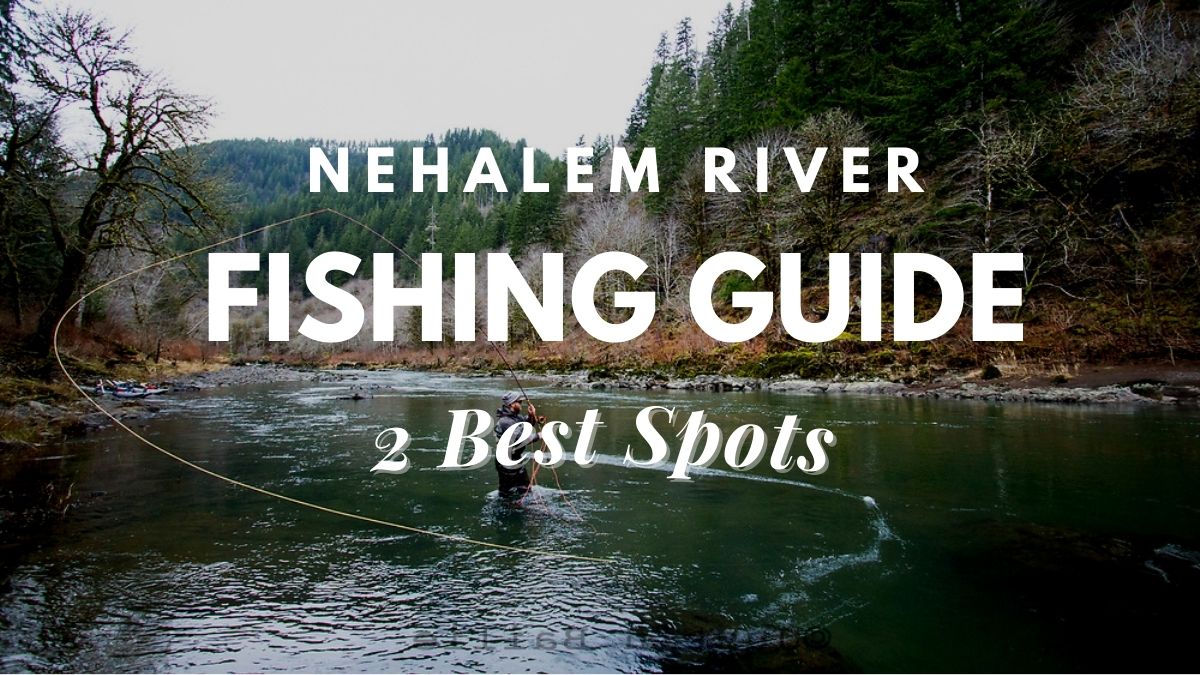
The Nehalem River, which is sandwiched between the Tillamook Bay and Columbia fisheries, sees a little less activity than its two more well-known relatives, but that doesn’t mean the fish aren’t there. The Nehalem River in Oregon is a well-liked location for fly fishing since it hosts yearly runs of coho and Chinook salmon in the autumn (from September through December). Anglers may test their salmon fishing prowess in a number of ways. There are many methods to catch a fish in this rumbling river, including wading directly into shallower areas of the canal or drifting a boat on a fly. The greatest fishing season may often last into November depending on the autumn rains, with a few lingering fish being caught in the cooler months. On this Nehalem River fishing guide, you will be able to figure out how to get the most out of your experiences.
What are the ideal fishing locations?
Due to its closeness to Portland, Nehalem Bay, the fourth-largest bay in Oregon, has tremendous popularity. Nehalem Bay’s entrance sometimes gets quite turbulent and hazardous to traverse. Neither a Coast Guard station nor bar advisory signs are present in Nehalem Bay. On VHF channels 16 and 22, the Coast Guard broadcasts bar conditions throughout the summer, but only when a boat is patrolling the region.
One mile west of Nehalem Bay’s bar entrance lies a whistle buoy. When contemplating crossing the bar or fishing in the jetty channel with the outgoing tide, the small boater must proceed with care. The south jetty reaches 600 yards out to sea. The following highlighted sections illustrate some of the hazardous tide situations that impact safe boating while traveling over the bar or in the jetty channel at Nehalem Bay.
Read: Is Traveling A Hobby? The Ultimate Guide To An Exciting Way Of Life
Learn about the Downsides Of Traveling As A Hobby
1. Conch Rock
When it is submerged in water, Crab Rock, which is 150 yards southeast of the Jetty Fisheries Resort docks, poses a threat to small vessels. Just west of the rock, a privately maintained red buoy is sometimes used to indicate the danger. If the buoy is there, keep to its right while going out and to its left when going in.
2. Pub area
Between the beach and the 30-foot curve, there are bars everywhere, which break with the ebbing water. The most secure path over the bar is often altered. Boaters leaving should pause just inside the door and carefully inspect the bar. Do not cross if the bar is breaking. If you want to cross, choose a peaceful location, and go; if the bar is cracking, do not try to turn back.
How do I enter?
Near the south jetty, the water is at its nicest. To traverse the channel safely, one must be conversant with its changeable conditions to the seaward of the jetties. Therefore, the range signs may not always indicate the precise channel and are also obscured by trees.
Nehalem Bay is known for its salmon fishing, crab fishing, and clam digging. Outside the jetty jaws, salmon fishing is good, but you should only do it in seaworthy vessels. Surprisingly, Nehalem Bay does not include enough of the fish species that are typically associated with the majority of Oregon’s developed deep water bays for regular fishing.
Types of fish that you can catch
Beginning the first week of July, chinook salmon begin to return to Nehalem Bay in modest quantities. Occasionally, depending on the quantity of fish returning, fishing conditions may be as intense as a Fourth of July fireworks display. Early August marks the climax of the summer run. The start of the autumn Chinook run often occurs around the first week of September. From September through early November, fall Chinook salmon may be found in Nehalem Bay and the lower tidal portion of the Nehalem River. Their abundance peaks in early October. Fish that are 5 years old and older often make up the age class of the returning Chinook salmon. Averaging around 2300 fish each year, ODFW combines statistical capture data for the summer and autumn runs. Use the same gear and methods to catch fish in both runs.
The lower bay has the finest autumn Chinook salmon fishing during the entering tide of the main spring or neap tides, particularly when the incoming tide occurs at dawn or sunset. The second-most fruitful fishing time is during the incoming tide of the minor tidal exchange in the daily tidal cycle, which happens at dawn or sunset. The greatest time of day to catch Chinook salmon is just before dawn. Make sure the bait is in the water 30 minutes before to dawn. The best times to go fishing are from late afternoon to half an hour after sunset and from dawn until midday. Troll a plug-cut herring early in the run from Fishery Point out to sea, either with or against the rising tide. In the canal that runs parallel to the east coast and the south jetty, troll for plug-cut herring. To maintain the bait in the Chinook’s striking zone, hefty sinkers up to 12 plus ounces must be used due to the lower bay’s swift tidal stream.
Troll a plug-cut herring, a bait-wrapped Flatfish lure, or a Hot Tail finish in the Deepwater channel in the river bend at the Community of Wheeler or in the channel across from Deer Island as the quantity of returning Chinook salmon rises. Keep in mind that Chinook salmon often bite before and after the tide changes. Chinook salmon often congregate between Fishery Point and the Community of Wheeler when high tide approaches. During the last hour of the rising tide, casting a rainbow-colored spinner, like the Yaquina Slammer, right above the deeper channel often yields fish.
Use a plug-cut herring, bait-wrapped Flatfish lures, or spinners to troll with the incoming tide, back troll, back bounce, or troll with the outgoing tide from the Highway 101 Bridge to the junction with the North Fork. The necessity of employing LCD marine electronics is shown by the fact that the depth of the canal above Fishery Point fluctuates with the shape of the bottom. In order to prevent the bait from hanging up on the bottom, increase the trolling speed in the shallow water length of the channel. As the channel deepens, reduce the trolling speed. Chinook salmon often strike the bait in response to a change in pace.
From the Highway 101 Bridge upstream to the head of tidewater at the Roy Creek County Park, anchor on the downstream side of the deeper holes. Effective choices for bottom fishing include using bait-wrapped Flatfish lures, spinner bait combos, spinners, bait-sweetened Spin-N-Glos, wobblers, or a chunk of salmon eggs the size of a walnut.
A gob of salmon eggs the size of a walnut and sand shrimp are used to bobber fish through the deeper holes from Roy Creek County Park’s head of tidewater to the Highway 101 bridge during the latter half of an outgoing tide through slack tide. The holes with the best yields may be found immediately before and below Roy Creek Park, as well as in the section of the river upstream from where it meets the North Fork.
What is the best time to go fishing at Nehalem River?
From August through September, coho salmon come to Nehalem Bay. Fish in the lower bay early in the run by trolling plug-cut herring, hoochies, or a streamer fly with the incoming tide from Fishery Point seaward. Use a diver, wire spreader, or diver to troll these baits in the top part of the water column. Use spinner bait combos like rainbow, chartreuse, or pink colored spinners to troll the upper bay.
Although they may return as early as mid-July, cutthroat trout most often do so from August through September. From the middle of July through the end of September, catch fish by trolling Doc Shelton spinners baited with night crawlers from the Community of Wheeler to the junction of the North Fork.
Fish using night crawlers, crawfish tails, or by tossing 14 ounce yellow or white Roostertail spinners in the upper tidal stretch of the North Fork or on the main stem of the Nehalem River.
From April through October, black rockfish enter Nehalem Bay, but from November through March, when there is substantial freshwater flow from seasonal storms, they leave the bay and migrate into deeper water during the day. For any of Oregon’s huge bays, the fishing for black and blue rockfish is the most unpredictable. The poor fishing is reflected in historical and present catch data. The jetty channel should be the best place to fish with the incoming tide just after dusk.
In the late spring, the bay is invaded by striped seaperch, pile perch, walleye surfperch, redtail surfperch, and white seaperch. Perch schools go into the tidal flats and begin to graze intensively on intertidal creatures. Throughout the autumn, fishing may be good to great depending on the tides and the weather.
Fish in the vicinity of current breaks, whirlpools, and rip tides when the tidal dynamics are active in the bay. There are sometimes current lines between the tidal flats and the nearby deeper water during the approaching or departing tide. The waterways that drain the tidal flats may be found by following the current lines. To increase the likelihood of success, the angler should explore the bay at low tide to locate the spots where perch may be caught during the incoming tide. Low tide also gives anglers the chance to pump shrimp and/or dig a limit of clams for personal use in any of the fantastic recipes featured in the book, Oregon’s Clams and Crabs, or to use as bait for perch.
Catch perch in the water along the south jetty, Crab Rock, and other nearby areas. From the Jetty Fishery upstream to the railroad bridge above Fishery Point, fish in the main channel along the east bank. Fish along the major canal that drains the north shore’s tidal flats from Oregon State Park to Wheeler.
With the tide, a few kelp greenling, white spotted greenling, and rock greenling migrate into the bay. The fishing is at best fair, with the finest fishing taking place in the canal near the south jetty from late spring to summer.
From the middle of December until the beginning of July, white sturgeon invade Nehalem Bay. Fishing is often spotty, going from being good one day to being terrible the next. With an average catch of 74 fish per year, the sturgeon fishery in Oregon is ranked fifth nationally. Mud or sand shrimp are the most successful baits. Dean’s Point and the southern end of Deer Island are the greatest spots for fishing. Between Fishery Point and the town of Wheeler, sturgeon are also fished in the holes along the south shore. The Airport Hole, which is situated on the south side of the airport next to Nehalem State Park, is one of the finest spots. To reach the head of tidewater, fish the deeper holes in the river channel.
In the months of late January through April, lingcod spawn along the south jetty’s outermost stretch. The peak spawning season should be from late February to early April, although the fishing is at best erratic throughout that time.
The south jetty’s rocky structure should contain cabezon, however the fishing is patchy. Nehalem Bay State Park visitors may throw spinners or use bobbers to bank fish for salmon from the shore. It’s also effective to plop for salmon using sand shrimp and/or salmon eggs, although the crabs often consume the bait before the salmon can accept it. Fish for perch from Brighton seaward to the south jetty or from the railroad bridge above Fishery Point, although access is restricted.
How to get to the Nehalem River?
Compared to the north jetty, the south jetty provides superior fishing. Turn west from Highway 101 onto Nedonna Beach Road to reach the South Jetty. Park there and go to the jetty on foot.
The Jetty Fishery, the Brighton boat ramp, the Paradise Cove Resort, the Wheeler Public boat launch, and the Nehalem Bay boat ramp are among the boat ramps at Nehalem Bay on the south side. Nehalem Bay State Park is home to the North Shore Boat Launch. For access to the head of tidewater, launch at Roy Creek Park. oy Creek Park may be reached by State Highway 53 from Foss Road.

Proud owner of https://travelyouman.com/