
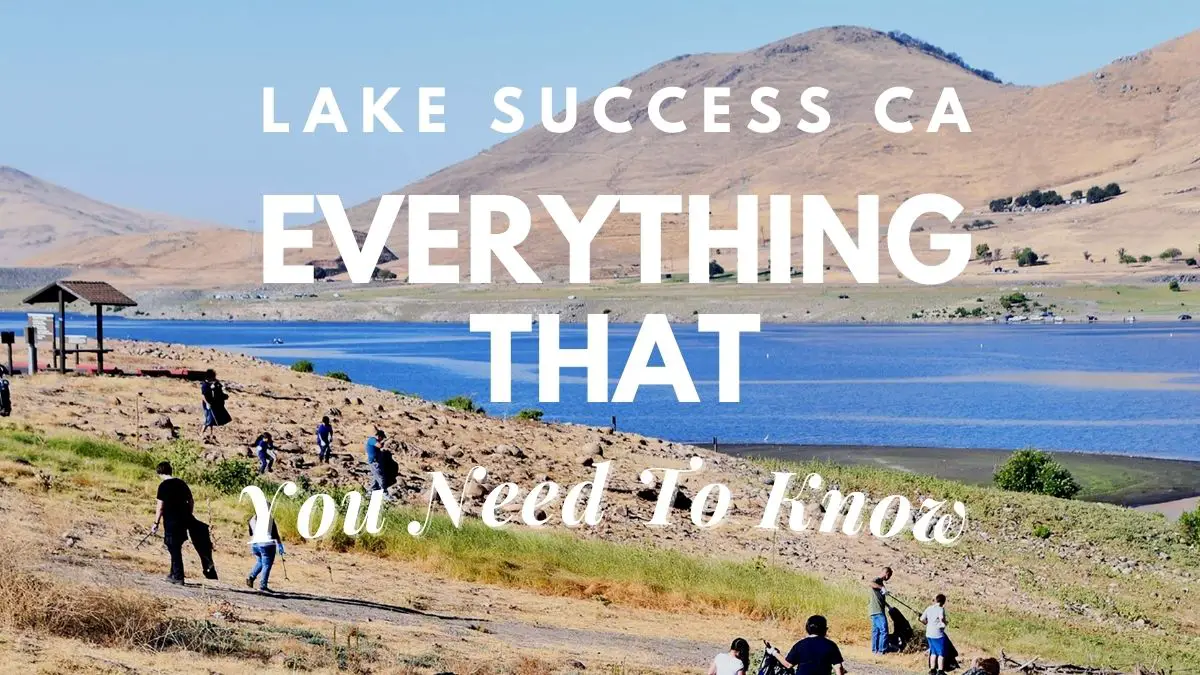
The desolate setting could put you off. On the border of the Sierra Nevada foothills, next to the Sequoia National Forest, stands the reservoir devoid of trees. It’s a straightforward lake for boating, fishing, and water storage, but it’s not very picturesque. Despite being close to the Sierra Mountains, there isn’t much foliage or trees around this artificial reservoir. at most a few scattered oaks. Anything else is artificial. This location is near to the Lower Central Valley at the southernmost tip of the Sierras.
What is Lake Success?
This picturesque location, with the Sierra Nevada in the backdrop, is near the southernmost point of the Central Valley and offers excellent boating and fishing opportunities for tourists. Porterville to CA 190 east for 5 miles.
Lake Success is a body of water on the Tule River close to Porterville, California, at 36.06°N 118.92°W / 36.06; -118.92. It is created by Success Dam and has an 82,000 acre-foot capacity (101,000,000 m3). The U.S. Army Corps of Engineers owns and manages the earth dam, which is 48 meters (156 feet) tall. Its building was finished in 1961. Flood prevention is the project’s main goal, although the lake also serves as a source of water for enjoyment and agriculture. Also crossing the lone bridge across the lake is California State Route 190. This is among the most prominent lakes that you can find in California as of now.
Read: Is Traveling A Hobby? The Ultimate Guide To An Exciting Way Of Life
Learn about the Downsides Of Traveling As A Hobby
Exploring the history of Lake Success CA
Success Lake was made possible by the relocation of a whole cemetery. The building business was fortunate because it was one of those years without much rain, and the Tule River was only about four feet wide when they built the final fill on the dam. Bartlett Park and Porterville Beach were destroyed during the dam’s construction. Families including the Wilcox, Lewis, Templeton, and Kaufman families as well as others lost their positions. There are several Indian relics at Kincaid Cover, which is still referred to by the family name and is being protected.
The Wilcox cemetery was once located on the Wilcox Ranch, but it had to be relocated to the Home of Peace Cemetery in the Porterville Cemetery, where the deceased are now interred. Some of the burial dates went back as far as 1859. The graves were being moved under the supervision of Louis Stephens. The $20 gold pieces that were meant to cover Origin Wilcox’s eyes were sought for by Sardis Templeton, who was in attendance. They allowed Sardis to retain the $20 gold pieces, even though they were now worth just 50 cents each. When Homer Wood was the owner and publisher of the Porterville Recorder, Sardis once served as its editor.
When assessments revealed that Success Dam would collapse in an earthquake in 1999, Success Lake’s future was questionable. The marina was lost and water enjoyment was severely hampered in 2004 when the lake level was reduced to 28,000 acre-feet. Later research dispelled such worries, and the reservoir has now been replenished to a capacity of 65,000* acre feet. The general population is gradually realizing that Lake Success is back in all its splendor.
Success Lake On September 18, 2021, the U.S. Army Corps of Engineers had their first-ever National Cleanup Day celebration with volunteers and personnel. Students from nearby schools not only cleaned up, but also planted trees.
Wildlife around Lake Success
A stretch of the northwest coastline is protected by a 1,499-acre wildlife refuge, which is regarded as one of the greatest places in Tulare County for birdwatching. Mallards, grebes, and coots find refuge closer to the coast while American pelicans and Canada geese are often seen on the lake. While migrating shorebirds swim in the shallows, bald eagles fly above over the lake. Herons, egrets, and kingfishers have a habitat in the wetlands that border the beach. California quail, cottontails, jackrabbits, and blacktail deer may all be seen in the nearby grasslands and pothole ponds. During the hunting season, certain locations are accessible. Hikers may easily reach the wildlife area thanks to the trails, which also greatly enhance the surrounding environment.
Mentions of Lake Success in fiction
In their science fiction book Lucifer’s Hammer, Larry Niven and Jerry Pournelle describe the destruction of most of the planet’s coastal towns by enormous tidal surges brought on by comet fragments striking Earth. Los Angeles is utterly devastated, and the San Joaquin Valley turns into an inland sea as a result of the dams in California collapsing. Two of the characters witness the Success Dam’s collapse. After the catastrophes pass, an enclave of civilization emerges in the imagined “Silver Valley,” which is situated just north of the Middle Fork of the Tule River, a little east or northeast of Springville.
Recreational activities around Lake Success
A popular pastime in Lake Success is boating. The waterways are a swarm of activity on hot summer weekends as fishing boats, canoes, kayaks, and various forms of watercraft coexist alongside water skiers, jet skiers, power boaters, and yachts. Between nightfall and morning, there is a 5 mph boat speed restriction, and water skiing and jet skiing are prohibited. Canoeing and kayaking are particularly well-liked due to the calm waters of the many bays along the erratic coastline. There are many competitions conducted here since the lake is regarded as one of the top lakes in the Valley for largemouth bass. The bass are numerous but often not huge. Bluegills, crappie, channel catfish, and sometimes caught trout are also captured. Success Lake also has a floating marina called Success Lake Marina. Since the dam passed all inspections, the lake has been replenished.
Only non-electric sites are available at Rocky Hill Campground, although it does include a picnic area and another boat launch pad. Day-use Bartlett Park contains a playground and picnic shelters. The lake can be seen beautifully from all three locations, with the Sierra Nevada mountains serving as a background. Although there are no official beaches, there are unofficial swimming spots close by.
Although some houses have a view of the lake and the public land that forms its buffer, there is no real estate for sale right on the coastline. Real estate is available away from the lake, and there are a lot of other hotel options nearby, including motels, cabins, bed-and-breakfasts, and private rentals.
Lake Success Marina
Initially Successful Early in the 1960s, Gerald and Della Weaver of Tulare designed and constructed Marina. The marina, which started as a modest trailer on the eastern side selling sodas, candies, and smokes, gradually developed into a circular floating marina with a bait and tackle store, refueling dock, walk-up fast food window, and sleeping facilities that was modern for the time. Mr. Weaver had permits to manufacture and distribute Mercury outboard motors, as well as Glaspar fishing and ski boats. Additionally, servicing for boats and engines was offered.
A large amount of dock space, rental slips and boats, a live bait cage, and lots of room for houseboat mooring were also available. Between 2012 and 2014, the U.S. Army Corps of Engineers temporarily reduced the lake’s water level so that testing on seismic faults close to the dam could be carried out. Since then, those pool limitations have been loosened. [Reference required] [4]
The brand-new Success Lake Marina was built in 2015 and is open all year, although it becomes more popular during the sweltering summer months (June–August). The marina has expanded over the years to currently feature several private docks for renting private boat slips and weekend slip rental or storage, as well as a shop with a wide selection of ice-cold beverages, snacks, beer, wine, toys, tackle, and live bait. With some of the available rentals, like the 10–20 person patio boats, 20–person patio boats with slides, fishing boats, kayaks, SUPs (stand up paddle boards), and water bikes, there are many options to go out on the water.
Things you should know about the vicinity around it
Lake Success, a modest-sized reservoir on the Tule River in the Sierra foothills, is the focal point of this IBA. It also includes the riparian habitat along each arm of the Tule River as it enters the lake from the east and below the spillway of the dam, as well as the vast grassland that surrounds the lake (which is especially well-developed on the north side).
Numerous breeding Grasshopper Sparrows may be found in great numbers on the open, valley-floor grassland to the north and west of Lake Success, while hundreds of breeding Tricolored Blackbirds can be seen in a nearby quarry pond (W. Principe, via email). Despite being virtually extinct near the foot of the Sierras, the Burrowing Owl is still a resident of this area. In the winter, it is joined by a diversified raptor group that once included the California Condor. The Prairie Falcon, Bald and Golden eagles, and bald eagles still winter in large numbers, and the latter two breed nearby.
Although the riparian environment in this area has gotten very little attention from birders during the summer, Yellow-breasted Chat has lately been identified to reside there, and it is probable that other riparian-obligate breeders also reside there. Thousands of waterfowl, particularly American Wigeon and Common Merganser, congregate at the reservoir throughout the winter, and hundreds of shorebirds, many of which overwinter, may be seen there in late October near the muddy boundary on the north side.
Environmental Issues
The flat and rolling grassland in the region will continue to face development pressure as Porterville moves eastward into the foothills since a large portion of it is still privately owned. The Sierra-Los Tulares Land Trust, an active conservation constituency in the area, has sparked interest in the preservation of extensive open space in the area, connecting the surviving valley floor grassland with the Sierras through the Tule River corridor.
Habitat
The vast grassland that encircles the lake, the riparian ecosystem along each arm of the Tule River as it enters the lake from the east, and the area below the dam’s spillway are all included. North and west of Lake Success, the broad, valley-floor grassland is often still wet in the early summer. A quarry pond is close by.
Camping Around Lake Success
The Tule Campground is located in the Tule Recreation Area in Tulare County close to Porterville on the beaches of Success Lake. The Army Corps of Engineers owns and jointly manages the recreation area with Tulare County Parks. Success Lake is a well-liked location for boating, waterskiing, sailing, kayaking, swimming, and fishing. Its surface area is 2,450 acres. A marina offers gasoline, boat rentals, and boating supplies. In the summer, the lake may reach temperatures of more than 100 degrees.
There are 103 campsites available at Tule Campground for tents, RVs, and trailers. The campsite is surrounded by a variety of widely spaced trees on the lake’s northeastern edge. 29 campsites have electricity hookups (30 and 50 amp). The Tule campsite is available all year. In the summer, activities around campfires are offered on Saturdays.
Final words
Now you know what Success Lake is all about. If you are a person who is looking forward to enjoying recreational activities in a lake in California, you may go ahead and select Success Lake without keeping a doubt or a second thought in mind. This lake is quite unique when it comes to the things that is capable of offering. Success Lake visitors may go boating in any capacity as well as hiking, biking, and picnicking. The marina and launch ramps are accessible to campers at Tule Campground. Enjoy a day of boating, water skiing, and fishing on the lake. Follow this guide and visit Lake Success CA to have an unforgettable experience.

Proud owner of https://travelyouman.com/