
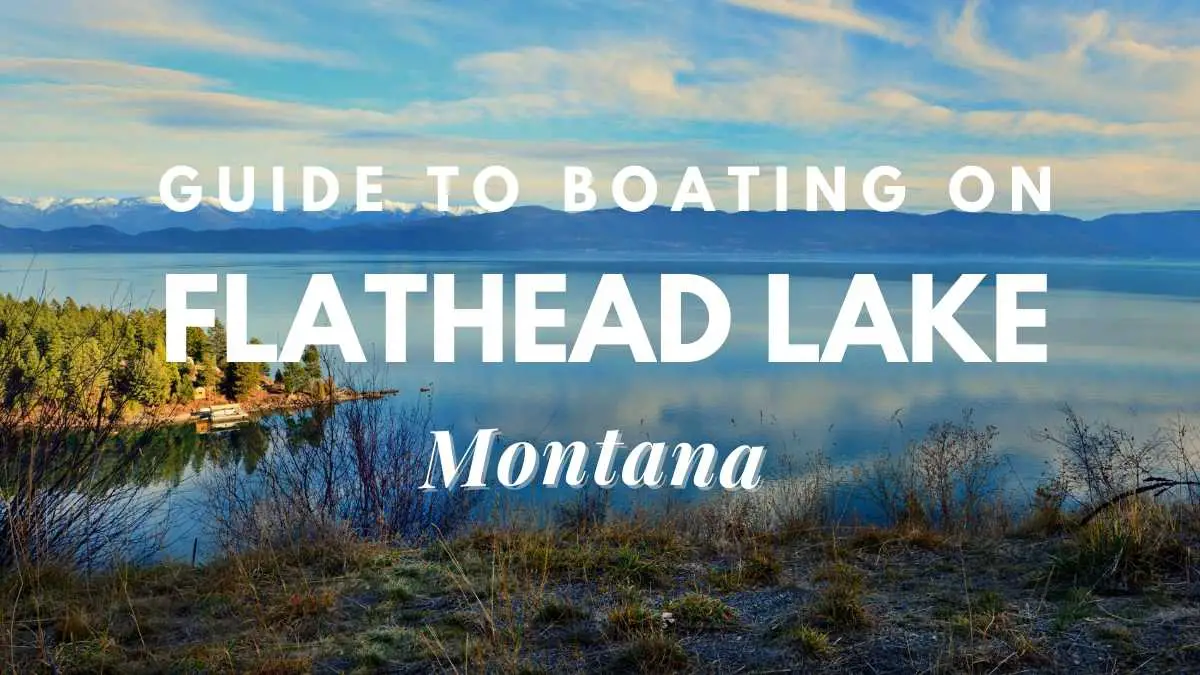
Visit the stunningly serene Flathead Lake in western Montana to live the lake life to the fullest. This freshwater paradise is home to a wide range of activities and is regarded as one of Montana’s most breathtakingly beautiful locations. Growing up, our mother gushed over Flathead Lake so much that we all believed we would move there as adults since there could not possibly be a finer location. Even though none of us made it there, I like weekend trips to Flathead Lake and think it’s one of Montana’s most unique regions. To make your life easy, we created this guide to boating on Flathead Lake Montana.
What is the Flathead Lake all about?
A vast variety of recreational opportunities are available at Flathead Lake, drawing tourists from all over the globe. It is a large, naturally occurring freshwater lake in Montana that is more than 200 square miles in size. Along its 185 miles of coastline, the lake provides breathtaking views.
It was created as a consequence of the Ice Age inundation of the ancient Glacial Lake Missoula. The biggest natural water body on the west side of the Continental Divide is Flathead Lake. On its east side, the lake is surrounded by the Mission Mountains, and on its west, by the Salish Mountains.
Read: Is Traveling A Hobby? The Ultimate Guide To An Exciting Way Of Life
Learn about the Downsides Of Traveling As A Hobby
Fishing and Boating in the Flathead Lake
Flathead Lake provides a wealth of boating and fishing possibilities for those searching for aquatic activities. Visitors who like fishing in Flathead Lake may appreciate discovering some excellent fishing sites around Sportsmans Bridge, off the lake communities of Somers and Big Fork.
Anglers will enjoy the many trout fishing opportunities available at Flathead Lake. The deep lake waters are ideal for trolling for those who want to catch exceptional trout. They may visit Flathead Lake’s shallow bays during the spawning season with great success.
But there are other species in Flathead Lake than trout. The diversity of species in the lake will delight visitors, making every fishing trip to Flathead Lake a fascinating experience. The lake also supports pike, whitefish, rainbow trout, yellow perch, bass, Kokanee salmon, and the enormous lake trout, which typically weighs between eight and twenty pounds.
What further activities are available?
Flathead Lake is home to a variety of public access points and provides a wealth of activities for visitors of various interests. Various camping and swimming options, as well as picnic shelters and facilities, are available at locations around the lake that are managed by the Montana Department of Fish, Wildlife, and Parks. Around the lake, there are a lot of boat launches as well.
The state recreation areas are a great option for anyone interested in a variety of Flathead Lake activities. Elmo, Big Arm, Finley Point, Walstad Memorial Park, Yellow Bay, Woods Bay, and Wayfarer are just a few of the public access sites that provide full amenities for swimming, camping, picnicking, participating in watersports, fishing, and boating.
Wild Horse Island is a great day trip destination for adventurous Flathead Lake tourists searching for activities. The 2,000-acre Wild Horse Island is located on the lake’s western side and can only be reached by boat. This makes it the perfect day trip activity to Flathead Lake for those searching for a peaceful, unwinding afternoon pastime.
Where to Rent Watersports Equipment and Flathead Boat Rentals
Recreational inflatable boats, inflatable kayaks, and paddleboards are popular along the beach if fishing is not your thing, but you still want to enjoy some water sports on Flathead Lake.
Boat rentals and day-use boating equipment are available at Arrowhead RV Park and Marina, Bigfork Marina and Boat Center, Big Arm Lakeside Marina, and Marina Cay Resort. To hire any water sports equipment like kayaks or paddleboards, go to these Flathead Lake boat rental businesses.
Top Things to Do in Polson for more information about the city.
About 100 feet out from the coast, the beach continues. Visitors are advised to bring their own food and beverages for an enjoyable picnic on the beach because there are no eating choices on-site. Bring or rent a wetsuit if you want to spend a lot of time in the water. The lake is rather chilly even in the summer since it contains glacier water.
It’s time to expand on our prior discussion on kayak rentals and discuss this well-liked Flathead Lake sport in more detail. Every significant town around the lake offers kayak rentals. They are available for short-term, long-term, or even weekly rentals. The Flathead Lake Marine Trail is one of the greatest spots to kayak nearby.
Final words
The Flathead Lake Marine Trail is a network of canals and rest areas that round the lake and highlight some of its outstanding features. Maps of the path are available at the tourist center, and most places where you can hire boats will probably also have them on hand.
The path is suitable for all levels of kayakers due to the variety of routes and distances you may cover. While the routes closer to shore with wooded terrain keeping the water calmer are better suitable for novices, those who are proficient in kayak navigation may appreciate the more difficult routes that travel through rocky water less guarded by the weather.
Additionally, there are access sites and camps on the Flathead Lake Marine Trail that are only accessible to those paddling hand-powered boats across the lake. As a result, paddlers may have a more tranquil experience in these locations.

Proud owner of https://travelyouman.com/