
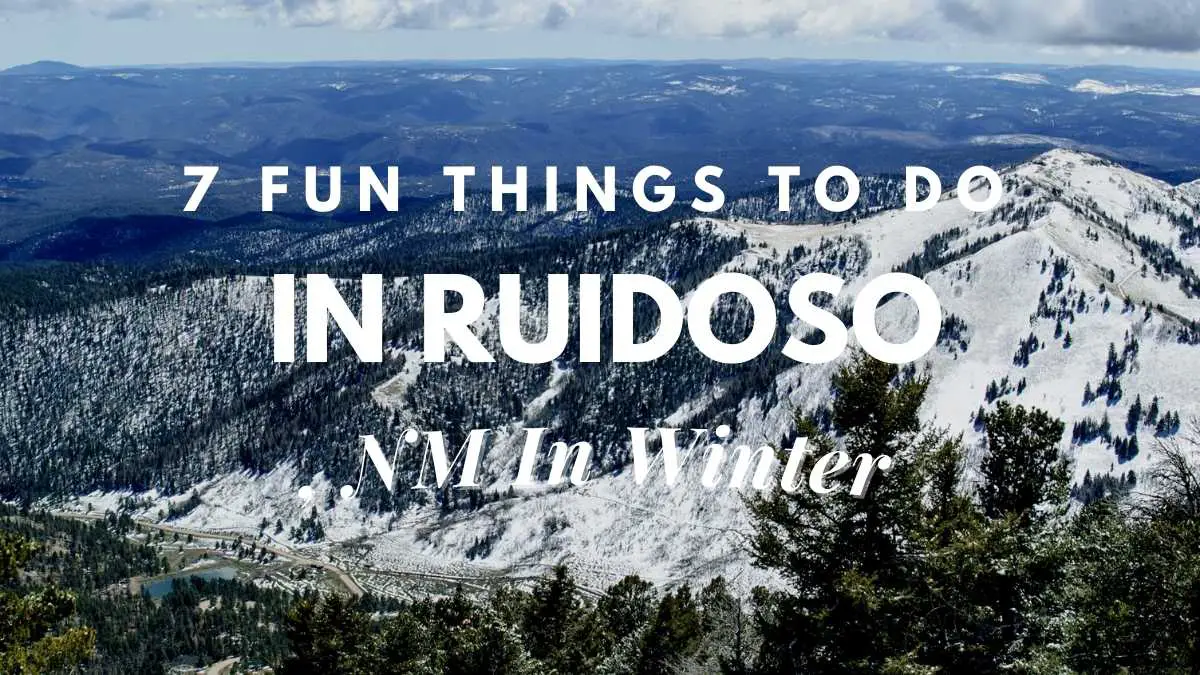
One of the greatest places to start exploring some of New Mexico’s most beautiful sites is Ruidoso! These are the top activities in Ruidoso, New Mexico! Since Ski Apache Ski Resort is the main reason so many people visit Ruidoso, we decided not to mention it. Instead, we decided to provide a list of some Ruidoso eateries, day excursions, and other historical attractions. On this article about things to do in Ruidoso NM in winter, we will be sharing few tips on how to get the most out of your stay.
1. National Forest of Lincoln
Lincoln National Forest, who has an elevation range of 4,200 feet to more than 11,500 feet, offers a broad range of recreational options and is home to 19 designated camping areas. Beautiful peaks and valleys, rough gorges, and slopes covered with pine trees make up the terrain. In the New Mexico Forest, visitors may go horseback riding, hunting, hiking, mountain biking, camping, snowboarding, and skiing. The park includes more than 200 miles of trails, including the Trestle Trail, the Three River Trails, the South Fork Trail, and the Crest Trail, for leisurely strolls or strenuous excursions.
Visit the campsites in the forest, such as Deerhead, Saddle, and Sleepy Campgrounds, where you may listen to the sounds of the forest as you awaken each morning, to see the many varieties of trees and animals that abound there. Activities for day trips are also available in the forest. Visit the Three Rivers Petroglyph Site or take a tour at the National Solar Observatory.
Read: Is Traveling A Hobby? The Ultimate Guide To An Exciting Way Of Life
Learn about the Downsides Of Traveling As A Hobby
2. Pillow’s Fun trackers
At Ruidoso’s well-known amusement park, Pillow’s Fun trackers, you may find fun for the whole family. Three go-kart tracks, an 18-hole mini-golf course, an arcade, bumper boats, a mountain labyrinth, and gemstone panning are just a few of the park’s seasonal and annual activities.
For more than 20 years, the Ruidoso attraction has entertained visitors. They are open every day of the week, as well as throughout the Christmas and spring breaks and all significant holidays. Please keep in mind that depending on the weather, certain outside activities may or may not be possible. Note that these tickets are for one person per ride and may be found at the office on the east side of the parking lot.
3. Museum Carrizozo
The Carrizozo Museum’s structure was originally constructed in the 1940s, back when it was a freezer locker. A museum with historical displays and artifacts, educational activities, and events was established in the structure in 2003.
The museum showcases a 1930s kitchen, an old rural schoolroom, a 1905 barbershop, a homesteader’s log cabin, and a Western section, with a concentration on railroad and ranching history. A gift store with publications about local history may be found, as well as cookbooks for New Mexican and southwest cookery.
Check visit the next building for a mining display, a chuckwagon, and railroad artifacts as well. From Thursday through Sunday, from 10 am to 2 pm, the Carrizozo Museum is open to visitors. In fact, Carrizozo is one of the greatest tiny towns in New Mexico, so it’s worth taking an additional hour or two to explore and take in the nostalgic atmosphere.
4. Loop of the Billy the Kid Scenic Byway
The Billy the Kid Scenic Byway Loop offers a glimpse into the past and some of the present while evoking the spirit of the famous West. Get some maps and travel guides at the Billy the Kid Interpretive Center before you go out on your journey.
The Hubbard Museum of the American West, located close by, has displays of vintage weapons as well as collections of bridles, saddles, and Native American artwork. The renowned racetrack Ruidoso Downs and the Spencer Theatre, which presents a variety of acts, are the next stops on the itinerary.
The adjacent Mescalero Apache Lands provide excellent winter and summer recreational options. You may go to Fort Stanton, where well-known individuals like Kit Carson and John J. “Blackjack” Pershing formerly resided. Visit the conservation area as well to see the Snowy River Cave System, a significant scientific and archaeological site. Other places to go are Capitan, which is the location of the Smokey Bear Historical Park and Museum.
5. A day trip to Roswell
The International UFO Museum and Research Center is a well-known tourist destination that has a variety of UFO encounter exhibits and displays. The kitschy museum, which was established in 1991, has a large library, information center, and gift shop featuring items inspired by UFOs. After that, stop to the Roswell UFO Spacewalk to experience a heavenly blacklight tour. This is undoubtedly one of the most bizarre day excursions from Ruidoso!
This unusual art display will transport you via a wormhole and a mutant forest to a spacecraft and outer space. Additionally, check out Bryan Ward’s creations in the lobby. Roswell is not only a UFO town; it also has a wide variety of other attractions, the Iron Cross emblem being one of the rarest. The crucifix was built by German POWs and is situated beside the riverbed. The Miniatures & Curious Collections Museum, Bottomless Lake State Park, and the Roswell McDonald’s (not kidding, it’s worth a visit!) are other attractions in Roswell.
6. White Sands National Park excursion
Welcome to White Sands National Park, one of the country’s most striking national parks. Discover the limitless kilometers of sand dunes that are encircled by Rocky Mountains, arid land, and a vast cerulean sky. Before beginning your adventure, stop at the White Sands National Park Visitor Center to acquire directions, information, and maps about the area. The best way to explore the park is via hiking, and White Sands offers five different path options.
Take a stroll along the Interdune Boardwalk to take in views of the desert and mountains or take a ride along the 8-mile beautiful route known as Dunes Drive. One of the most popular activities at White Sands National Monument is dunes sledding, and you may find ideal locations there in the park’s rear section. Camping in the wilderness is another pastime of tourists. Don’t forget to catch the sunset to complete your day excursion to White Dunes, which offers a special contrast to the white sands!
7. Carlsbad Caverns National Park excursion for the day
Carlsbad Caverns National Park is the ideal day excursion from Ruidoso since it has so much to offer! There are two routes within the region that will enable you thoroughly explore the cave, which is really much more than simply a little cave (it is recognized worldwide!).
The 4000-foot-long Big Room Trail is made up of a large limestone chamber. There are several sculptures and rock formations along this paved, simple walk. The Natural Entrance Trail is very difficult and drops 750 feet.
Along the route, there are hand rails and seats where you may rest. At this underappreciated national park, you may also take part in ranger-led excursions. Drive the Walnut Canyon Desert Drive outside of the caves to see the animals and natural surroundings of this New Mexico gem. Explore the major landmarks inside the park and caverns, including Rattlesnake Springs, King’s Palace, Bottomless Pit, Lion’s Tail, Slaughter Canyon Cave, and Hall of the White Giant.
Final words
Based on this article about fun things to do in Ruidoso NM in winter, you can figure out whether to go ahead with these attractions or not. Then you will surely fall in love with the outstanding experiences coming on your way.

Proud owner of https://travelyouman.com/