
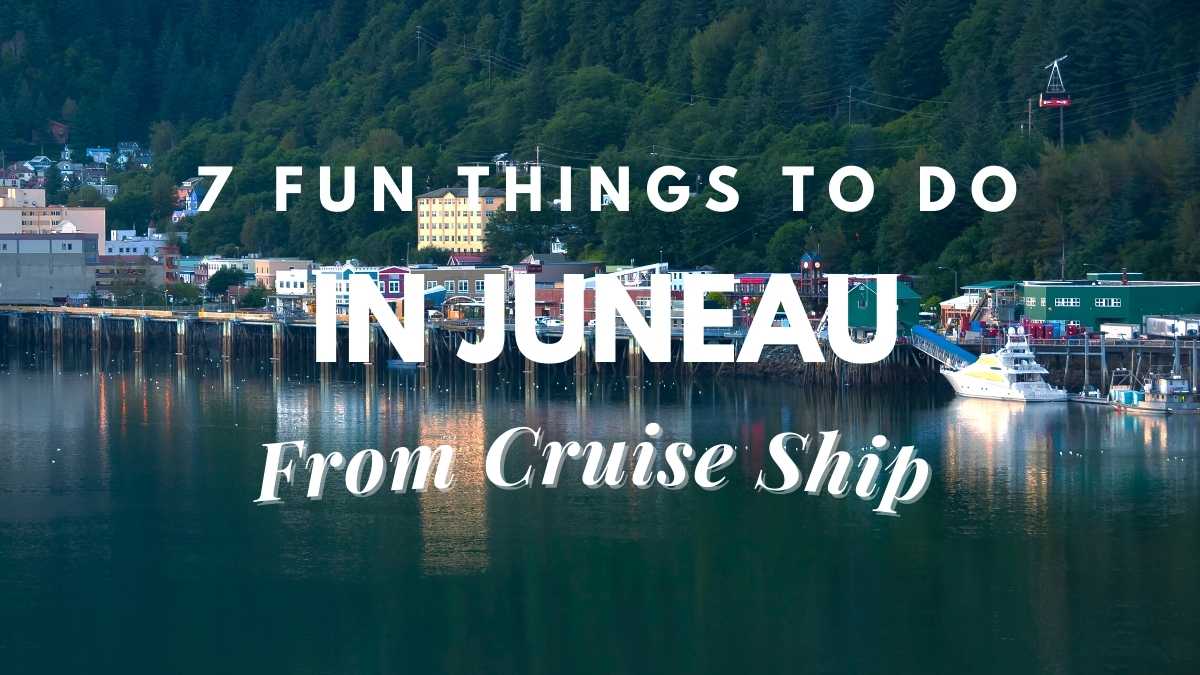
Cruise ships traveling down Southeast Alaska’s Inside Passage nearly usually stop at Juneau, one of the most picturesque state capitals in the United States. The city provides a stunning background for the many activities that tourists may engage in since it is surrounded by rainforests, mountains, intercoastal rivers, and glaciers. In addition, it is the only state capital that is not accessible by automobile; you must use a cruise ship, an airplane, or a ferry to get there.
After Anchorage and Fairbanks, Juneau has slightly under 32,000 residents, making it the third most populous city in Alaska. With a total area of 3,255 square miles, it is also the biggest state capital in the United States and the only one with a border to another nation (Canada). Due to its size and significance, Juneau is a great city for shopping, with several top-notch pubs and eateries.
You’ll probably only have a few hours in Juneau if you’re going by cruise liner, so you’ll need to choose what to do with that time. Long-term visitors will want to check out the local museums and arrange even more outdoor activities including bicycling, hiking, glacier trekking, whale watching, animal viewing, salmon bakes, and skiing and snowboarding. In this article, we will share a list of things to do in Juneau from cruise ship.
1. Visit Alaska State Capitol
Start by taking a free tour of the Alaska State Capitol building on 4th Street. You can pick up a brochure there and explore the grounds whenever you like between 7 am and 5 pm, or you can sign up for a 30-minute guided tour in the lobby every Tuesday and Friday at 1:30 pm and 3 pm through late September. In any case, you may see the murals and Art Deco architecture of the structure, as well as a Liberty Bell replica, old photographs, and artwork commemorating Alaska’s formal admission as the 49th U.S. state in 1959.
Read: Is Traveling A Hobby? The Ultimate Guide To An Exciting Way Of Life
Learn about the Downsides Of Traveling As A Hobby
2. Visit Juneau’s Fascinating Museums
Visit the Alaska State Museum on Whittier Street off Egan Drive for a comprehensive look at Juneau’s past. There, you may see outstanding displays on the region’s rich Indigenous culture, Russian role in Alaska, and wildlife.
The Juneau-Douglas City Museum, which is situated at Fourth and Main Streets across from the State Capitol, is devoted to chronicling the town’s history and that of the pioneers who formerly called it home. On July 4, 1959, the first Alaska state flag was hoisted in front of this structure.
At the end of Basin Road, the Last Chance Mining Museum, which houses some of the original equipment from the Alaska-Juneau Gold Mining Company, which operated from 1912 to 1944, is accessible to those who are interested in Juneau’s history in the mining industry after a 45-minute walk (or quick ride).
3. Mendenhall Glacier Terminus
Make time to explore the Mendenhall Glacier Recreation Area, which was named in 1892 in honor of Thomas Corwin Mendenhall, a President Harrison appointee who oversaw the U.S. Coast and Geodetic Survey from 1889 to 1894. Mendenhall also served on the Alaska Boundary Commission, which was in charge of measuring the border between Canada and Alaska internationally.
The Tongass National Forest’s 17 million-acre Tongass National Visitor Center, which boasts over 400,000 annual visitors, lies 20 minutes west of Juneau and was the country’s first Forest Service facility. Its interior observatory has wonderful educational displays and resources, including movies, maps, charts, and images on glaciers and the region’s diverse flora and fauna, as well as excellent views of Mendenhall Glacier. The leisure area’s outdoor areas and its facilities are free to use, however there is a nominal entrance charge to enter the facility.
One of the easiest glaciers to reach in the world is Mendenhall Glacier, one of the 38 located in the Juneau Icefield. From the cruise ship port, you may drive, board a tour bus, or even board a local bus to go to the Recreation Area. Although the glacier may be viewed from the visitor center, only around 12 miles of the Mendenhall Glacier can really be seen from there. There are a number of hiking paths of different lengths (paved, unpaved, or made of wood), some of which provide superb, beautiful views of the glacier while others lead to waterfalls, salmon streams, and extensive forests.
Wildlife like as bears, beavers, porcupines, minks, and eagles may all be seen in the region around the glacier. Strong hikers should attempt the West Glacier Trail, which goes to the Mendenhall Glacier’s edge, if they have a full day to devote to the paths. This path, like the majority of the others, does not begin at the Visitor Center; rather, you must travel from Mendenhall Loop Road to Montana Creek Road before following the signs to Mendenhall Campground.
4. Experience the Mount Roberts Tramway in Juneau, Alaska
Right at the cruise ship dock, the Mount Roberts Tramway transports guests 1,800 feet straight up the slope of Mount Roberts in cars that run every six minutes. You can see Admiralty Island, Douglas Island, downtown Juneau, and the Chilkat Mountains on a clear day. In very clear conditions, you may even be able to see Glacier Bay to the northwest.
Watch the 18-minute Tlingit cultural documentary that is included in the tram ticket fee at the top of the tramway, then browse the gift store or get some food. At the Juneau Raptor Center, where damaged birds that can’t be returned to the wild after rehabilitation may reside, keep a watch out for bald eagles.
From here, the large route network includes hikes to the peak of Mount Roberts, which is more than 3,800 feet above sea level, with distances ranging from six miles to half a mile (and 2,000 feet higher than the Tram Mountain House). The moderate climb to Father Brown’s Cross, which is approximately 300 feet higher than the starting point at the Nature Center and offers expansive views of the Juneau and the Gastineau Channel, is one that many people choose. Strong hikers with lots of time may use the tram one way by either ascending to the top or returning to the bottom of the mountain via the Juneau path that begins on Basin Road.
5. Experience Dog Sledding
A visit on a helicopter tour may be made to a summer camp where sled dogs are preparing for the Iditarod Race the following year. Early in the season, the dogsled driver is helicoptered up, and he sets up camp on the Herbert Glacier before the summer trips. Small groups may talk to the mushers and touch the dogs for a while. Additionally, you could have the chance to go on a wild dog sled trip.
Otherwise, you may go on a 2.5-hour dog sledding expedition in and around Juneau with businesses like Alaska Shore Tours or Gold Rush Dog Tours.
6. Sea kayaking and glacier
Give sea kayaking a try on your next vacation to Juneau, regardless of your prior experience. At the cruise ship port, board a bus, and go via bridge to North Douglas Island. With this specific trip, it will take you around 25 minutes to go to the boat ramp that is located across from Mendenhall Glacier and Auke Bay. A brief lecture is given by the guides, who also help you put on your gear and board the kayaks. The kayaks are lined up on the beach. To make them simpler to steer, two-person sea kayaks often incorporate foot pedals in the back seat that control the rudder.
You could paddle around the bay for many hours depending on your trip, so having strong upper body power is essential if you want to stay up with a kayaking group. You may anticipate paddling against wind and tidal currents at least sometimes. Eagles flying above and harbor seals to be on the lookout for. Some tour providers offer visitors refreshments including water, crackers, cheese, and salmon spread after the trip.
7. Take a Jeep Tour and Hike the Douglas Island Rainforest Trail
Although numerous additional roads intersect this major route and travel around Douglas Island, Juneau’s primary coastal roadway only stretches five miles south of Juneau and roughly forty miles north. Numerous jeep companies provide excursions across the region that combine jeep travel with trekking through the jungle and zip-lining.
Most trips start with a ride around Juneau’s downtown as your skilled guide highlights important historical landmarks. The path heads north after crossing the Gastineau Channel on the Juneau-Douglas Bridge, delivering you to the very extremity of the island where you may take a 1.5-mile stroll over the well-maintained gravel track on the Rainforest Trail. The experience is enhanced by your guide’s knowledge of the plants, fungus, and other organisms that may be found along the route. The Chilkat Mountains may be seen in the distance as you go down the beach next.
There are other more hiking locations in Juneau, such as the downtown area, Mount Roberts, and the Mendenhall Glacier Recreation Area. One well-liked route is the three-mile “Perseverance Track,” which begins in the city’s center on Gold Street and travels through one of the valleys where Juneau’s gold was discovered before joining another, more challenging trail that ascends Mount Juneau.
Final words
Now you are aware about a list of fun things to do in Juneau from cruise ship. Keep these options in mind and you can surely have a great time with your loved ones. No matter what you do, you will surely fall in love with all adventures coming on your way.

Proud owner of https://travelyouman.com/