
The Delaware River runs 331 miles from Hancock, New York, to Cape May Point, New Jersey, and is the longest free-flowing river in the Eastern United States. The river delivers water to 10% of the American population, although draining just 1% of the country’s land mass (13,000 square miles): 700 million gallons of water every day for nearly 20 million people. While the Delaware River basin’s human population exceeds that of 40 states, it is home to an incredible variety of wildlife, including the East’s greatest winter concentrations of bald and golden eagles. It’s a lot of fun to float along this river. Continue to read this article and we will share some more details on Delaware water gap kayaking.
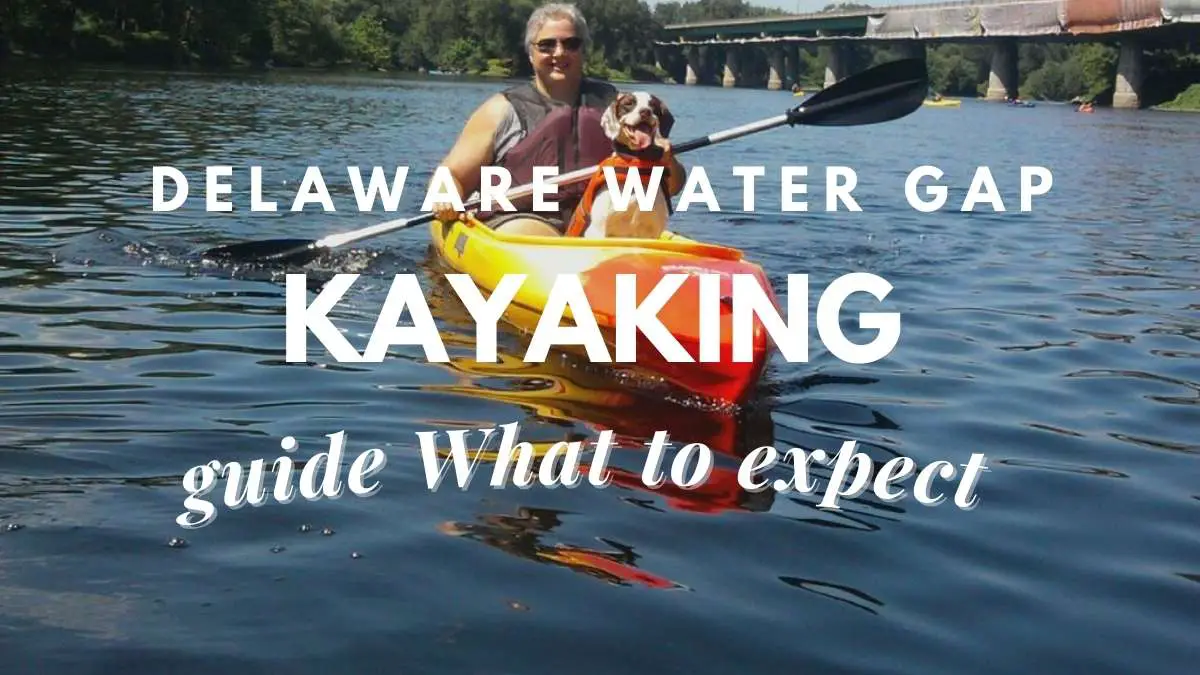
Kayaking in Delaware River Upper
The beautiful river flats from the confluence of the East and West Branches in the New York Appalachian Plateau, 21 miles south, support a plethora of natural species, including eagles. The Delaware starts its swift descent from Hankins via riffles and rapids interrupted by shallow pools.
The river reaches its deepest point (113 feet) in Narrowsburg, and starts its most distant part to Barryville, which is bordered by sheer cliffs. The remaining 17 miles to Matamoros are a rapids roller coaster that can be completed in less than five hours in a raft in the spring. The Mongaup River meets the Delaware about halfway down this length, causing large, high standing waves before reaching Hawks Nest, a picturesque valley five miles north of Port Jervis. The spring high in the Upper Delaware is normally gone by June, but there’s always plenty of water because the Delaware River Basin Commission requires discharges from five reservoirs to keep the Milford-Montague gauging station at a minimum flow of 1750 cubic feet.
Read: Is Traveling A Hobby? The Ultimate Guide To An Exciting Way Of Life
Learn about the Downsides Of Traveling As A Hobby
Kayaking in Delaware water gap middle part
Between Milford and Dingmans Ferry, there is little evidence of habitation and no traffic noise on Minisink Island, the river’s biggest. River birds and eagles inhabit the narrow water, which is peppered with little ripples. When the water level is high enough, you may kayak up through the island to a creek near the southern edge. Rhododendron has taken over the whole bank. It’s really lovely when they’re in bloom. Then in August, it’s all about the wildflowers. Flowers in yellows, fuchsias, and cardinals!
Each segment of the river has its own distinct characteristics. If you like easy, broad water with plenty of wildlife, the Delaware Water Gap National Recreation Area’s length from Milford to the Water Gap provides a plethora of day and overnight outings. The first of numerous islands along this section of river, Minisink and Namanock, are where the water starts to create pools. Shapnack is located below Dingmans and is really a peninsula that is shut off from the Pennsylvania side when the water is high. Bucks Bar is the next stop. It’s called a bar by the Park Service, but it’s really an island.
Islands serve as landmarks for river travelers passing through the National Recreation Area, which grew out of canceled plans for a dam on Tocks Island. The dam would have created a massive reservoir on the river above it. Tocks, like Poxono, Depew, Sambo, and the others, is still a stop along a peaceful, easy trip peppered with beaver, bear, wild turkey, egrets, herons, and eagles. On several of the islands, river camping is permitted at approved National Park Service sites, but only for boaters going from one access point to another when the distance between them is too considerable to be crossed in one day. Each location allows campers to remain for just one night.
1. Walpack Bend
Walpack Bend is situated immediately downstream of Bushkill, Pennsylvania, with Flatbrookville, New Jersey, being the closest community. High, steep hills detour the river’s flow here, causing it to totally change direction twice in the span of a mile or two. The Delaware makes no other remarkable reversal during its entire length.
The river is constrained on both sides by hills and mountains, resulting in a quicker water flow and some spectacular rapids. The river seems straight and broad as you push out, but even from here, looking downstream, you can see a mountain that appears to be obstructing the path. A ridge of rock runs along the river’s left bank. As you go along, you’re certain the river is disappearing down a massive drain; it seems to run as straight as an arrow into the mountain ahead.
Suddenly, the river’s left bank, the rock wall, vanishes, and the water rushes through this breach, turning eastward, then northeastward, totally reversing course. The Bushkill River enters on the right shortly before this breach.
2. The granite ledge
The granite ledge that used to be on the left bank is now on the right bank, but considerably higher. It is a shear wall along the water’s edge, although it slopes slightly upwards and is covered with hemlocks and a few hardwoods. The river’s main channel follows the right bank, shaded by this massive rock wall, and the water is deep and gloomy. Huge jagged, angled rocks that have broken off from the cliffside over time sometimes emerge out of nowhere in the murky depths of the ocean, some reaching up to within inches of the surface. Eagles and red tail hawks may be seen flying over the river with their partners, calling to each other.
The river expands and gets less deep as you travel around Walpack Bend. Massive rocks are visible all along the river, forming rapids with an ominous roar that offers enough notice. The river seems to be rushing toward a drain once again, since the Kittatinny Range, New Jersey’s largest mountain range, is obstructing its passage. The river bends again at the final minute, this time to the south, seaward. Another mountain stream, the Flat Brook, arrives from the New Jersey side at this curve.
3. Kittatinny Mountains
The river is now flowing in the right direction, towards the wooded Kittatinny Mountains on the left bank. The Walpack Bend adventure is nearly over but hold on. An enraged snarl greets you once again, heralding the arrival of white water. It may be seen in the distance—white, foamy waves surging up.
You can see the “V” pointing downriver, indicating your course, as you approach the rapids, which are really three. Submerged boulders are indicated by the “V” pointing upriver; there are numerous of them. The canoeist in the bow will have to work for his living. Kneel in the boat for increased stability. Put on your life jacket if you haven’t already. And best of luck. You’ve finished the most thrilling length of white water in the New Jersey part of the river north of Foul Rift at Belvidere when you travel over the third rapids. More importantly, you’ve been on a canoe excursion filled with exhilarating beauty and tranquility. You’ve just traveled through Walpack Bend, a pure river wildness.
Kayaking in South of the Divide
Looking at a map of Warren County south of the Delaware Water Gap, it seems like getting from Belvidere to Phillipsburg is simple. Except for the two four-letter phrases Foul Rift, which can be seen on a map, it seems to be an easy task. From Belvidere, right before the massive concrete cooling towers of the Metropolitan Edison power plant’s coal furnaces, you come to Foul Rift, well dubbed as one of the Delaware’s most dangerous rapids. Beginner canoeists should steer clear of this region. In half a mile, the river dips 22 feet. There is no constructed portage around the rapids, so canoeists must shore on the cliffs on the New Jersey side, then carry their canoes over the sand bars and ledges to calmer water, even at moderate river levels. The Delaware River Basin Commission’s Recreation Map gives the following advice to canoeists: “A word of warning about Foul Rift is in order. This location should only be visited by the most experienced and well-equipped boaters. Only portaging around the whole region or lowering the unmanned boat by line ensures safe passage.”
Kayaking along Martins Creek
Kayaking along Martins Creek, five miles south of the rapids, is a more relaxing option. The vistas below Martins Creek let one forget about the stresses of modern life, and there are areas where the banks resemble those seen by Dutch explorers three centuries ago. About two miles from the Martins Creek access ramp, there are a few “Class 1” rapids in narrows surrounding islands. A Class 1 rapid is the gentlest of the six classifications, with just a few riffles and modest waves, but no obstacles. Of fact, as every canoeist knows, a Class 1 may become a Class 2 or higher with each passing storm because a tree may have fallen in the river or a few rocks may have altered position. On the main stem of the Delaware, there are no rapids higher than Class 3.
In a river, an “eddy” is a vortex of water created by another stream pouring into it. One such location is Sandt’s Eddy. The Pennsylvania Fish Commission has an access area there as well. Boats were “overnighted” in the calmer waters of eddies like Dingmans Eddy, Upper Black Eddy, and Sandts Eddy years ago when boatmen transported commodities up the Delaware.
Hog Rift is located farther south. The fissure got its name because a large number of pigs were formerly dumped into the river nearby after being severely poisoned from eating putrid distillery muck. Their swollen bodies washed up along the riverbanks. The term remained despite the fact that the remnants were washed away by many floods.
Getters Island is a short upstream protrusion that almost brushes the Pennsylvania riverbank at Easton, about ten miles from Martins Creek. The island is named after Charles Getter, who was publicly hung for the murder of his wife on the island in 1833. The steamer Alfred Thomas exploded in Getters Island in 1860, killing at least 10 people.
You can also start Kayaking from Phillipsburg
Kayaking the Delaware may also start at Phillipsburg and continue south. The confluence of the Lehigh and Delaware rivers may be seen across the lake. The Lehigh River was known to the Lenape Indians of the region as the “Lechauwiechink,” and early settlers referred to it as the “West Branch of the Delaware,” the “East Branch,” and the “Forks of the Delaware.” Years later, the Lehigh was acknowledged as a separate river and given its current name.
South of Phillipsburg, a canoe or kayak excursion may be just as gratifying as one that begins at Martins Creek. You’ll cruise via Old Sow Island and then Raubsville, Pennsylvania. Raub’s Ferry used to transport travelers from New Jersey to Pennsylvania and back before there were so many bridges over the Delaware. Ferries could only run where the river was always deep and calm enough to securely transport people.
On a hot summer day, when the lake widens, separating Hunterdon and Bucks counties, its cold, clear peacefulness invites total absorption. Friends and family members like descending this portion in a number of ways. Canoes, sailboats, rafts, kayaks, jet skis, and small motorboats weave a tapestry of footprints in the water as you stand on the pedestrian bridge at Bull’s Island State Park, nine miles south of Frenchtown. The tubists, the coolest of customers, glide through the indiscriminate maze of wakes. Drifting in an inflated large innertube at the river’s slow flow of 1.5 mph is the ultimate expression of aquatic tranquility since it is both effortless and affordable. Regardless of how you choose to travel the river, you’ll find the stretch of water that separates Hunterdon and Bucks counties to be welcoming, friendly, and beautiful.

Proud owner of https://travelyouman.com/