
A few hours north of busy Southern California and in the stunning Santa Ynez Valley, Cachuma Lake provides excellent fishing. Due to this limitation, powerboaters don’t utilize the reservoir, also known as Lake Cachuma, which makes it the ideal hideaway for kayak fishing.
Despite the fact that greater horsepower engines are permitted on fishing boats in certain locations and away from trolling boats, you won’t have to contend with many of the enormous wakes the power squad creates at other reservoirs where water skiing and Jet Skis are permitted.
Here, you may relax for a few days while fishing to your heart’s content. There are plenty of largemouth and smallmouth bass in Cachuma Lake, and there is also outstanding fishing for rainbow trout, crappie, channel catfish, and other fish species. Game fish have excellent habitat to call home because to the abundance of flora in the lake.
Lake Cachuma Bass Fishing
Populations of largemouth and smallmouth bass vary little between years with abundant water and years with little water. The shallower waters where bass spawn at Cachuma Lake provide great cover, making this area ideal to target from early April to early June.
Broadhead bass
The Narrows, Cachuma Bay, and Arrowhead Island are popular areas for largemouth bass to congregate. The island’s surroundings provide a relatively ideal environment thanks to the cover and flora. Around the island, there are hiding places for baitfish that attract large bass. Early April often marks the start of the spawn, which provides two months of excellent bass fishing, including some very large fish. For increased numbers the next year, make careful to return the females. Bass may be caught from the beach at Jack Rabbit Flats. Fish the cover and rocks by casting perpendicular to the coastline.
Here, finesse baits do nicely. Use shallow crankbaits, swimbaits in rainbow colors, and Rat-L-Trap type lures in shad colors to fish the coastline. Throw some topwater early in the morning. The early season fishing is greatest in Cachuma Bay and the Narrows for boat fishermen. Bass go deeper once the spawn is done and are harder to capture from shore. After the female bass go deeper, the male bass remain in the spawning area for a little period. They remain to safeguard their eggs and young from the bluegill that arrive to spawn later.
Throw some bluegill impersonators out there, and you’ll undoubtedly attract some defensive bass to the net. It’s best to fish earlier in the day, and topwater are excellent for fishing early in the morning and late at night. The bass are holding in deeper areas throughout the lake from mid-summer to early spring, so look for outcroppings in 20 to 60 feet of water. You’ll probably succeed by sticking with it after you locate the appropriate depth, so keep looking and fishing until you do.
Smallmouth bass
Smallmouth in Cachuma Lake are attracted to rock formations as they are in other locations. They often cling to the rocky outcroppings here at the dam’s ends, from Tequepis Point to Clark Canyon, and in Sweetwater Bay.
Smallmouth bass move shallowly during the spawn in the bays close to the dam. Use Senkos or other delicate techniques over the bass that are bedded throughout the day. Buzzbaits and other topwater lures are best used in the early hours.
Smallmouth bass are likely to be staying in deeper water, particularly close to the dam, after the spawn stops in June. Swimbaits, Rat-L-Traps, and other crankbaits may be used to target any of the ledges in the vicinity. It works nicely to imitate shad and rainbows.
Smallmouth become a little laxer and hold in deeper water during the colder months. In cooler water, slow-moving baits may catch a few fish, but at this time of year, it would be preferable to target the rainbow trout that are abundant across the lake.
Rainbow trout
Most years, Cachuma Lake’s winter months see a significant increase in the planting of rainbows. In reality, Santa Barbara County and the California Department of Fish and Wildlife often work together to fill the lake, making it one of the most heavily stocked lakes that can be reached easily from Los Angeles and other SoCal locations.
You may catch trout rather consistently in shallower water and from shore from late autumn through early spring when the temperature is cooler. Trout stocking is halted during the summer, and the survivors are forced to travel far in search of cold water, making trout fishing much more difficult. The smaller rainbows may grow to be a respectable size because to the nature around the lake, which offers them enough shelter. A good number of trout between the sizes of 15 and 18 inches are captured, and larger fish aren’t that unusual either.
One of the most well-liked places to fish for trout is Cachuma Bay. When trolling, tempt them with Needlefish, different spoons, and Kastmasters topped with worms. Troll up to the region near the dam, then back down from Cachuma Bay. Trolling should take place at depths of 10 to 30 feet from late fall to early spring, followed by diving to 50 to 80 feet in the summer. Trout will go shallower and closer to the shore in cooler weather. They are patrolling the shallower areas in search of forage such as baitfish.
In the colder months, when trout are eating within throwing distance of the coastline, bank fishermen may have success from Harvey Cove and the marina area. In some places, you have easy access to the coast, so you may stretch out along the bank. You ought to have lots of space. When fishing from shore, use salmon eggs, inflated nightcrawlers, PowerBait, or one of our other strategies to capture more rainbow trout.
Fishing for crappies
In Cachuma Lake, crappie may be abundant. They may also be hard to find, which makes them more challenging to regularly target here. If you’re ready for the endeavor, try looking for them around The Narrows in the direction of the reservoir’s entrance for the Santa Ynez River.
Use crappie jigs in the colors white and yellow or silver and red. Throw your jig behind trees that are submerged for shelter. A quick retrieve may be quite successful. Along the way, you could even catch some redear sunfish or bluegill.
Fishing for channel catfish
The bays and inlets around the lake are teeming with channel catfish. You may also capture a big here. Be ready since fish up to 32 pounds have been reported. Every cove around the lake may have a brand-new lake record, with local catfish anglers’ favorite spots being those off the Loop Trail and Santa Cruz Bay.
Mackerel is the best option, although stink baits, shrimp, nightcrawlers, and mackerel all perform well. Because the cats in this area may be large, you should use a powerful rod, 15 to 20 pound line, and large hooks. Cast-and-wait strategies and gradual retrieves are effective. Here, shore fishing can be quite productive and produce some incredible catches. From early spring through late autumn, the bite is mostly continuous until the fish slow down and eat less during the winter.
Additionally, according to some accounts, blue catfish are present in Cachuma Lake. Although they are a less frequent catfish species in California, they have the potential to become much bigger. More information is available at Catfish Fishing: Simple How-To Techniques and Tips and Best Catfish Fishing Lakes and Rivers in California.
Organizing Your Travel
Cachuma Lake is a site to behold and located about 30 minutes north of Santa Barbara along Highway 154. With fishing piers, hiking paths, lake cruises, and playgrounds for youngsters, Cachuma Lake Recreation Area provides fantastic recreational opportunities for you and your family. A nature center provides comprehensive information about the region’s fauna.
At the marina, there is a shop that sells bait and gear in addition to food and other necessities. Even if you don’t own a boat, you may reach the whole lake by renting a boat or a kayak.
Access via Boat and Shore
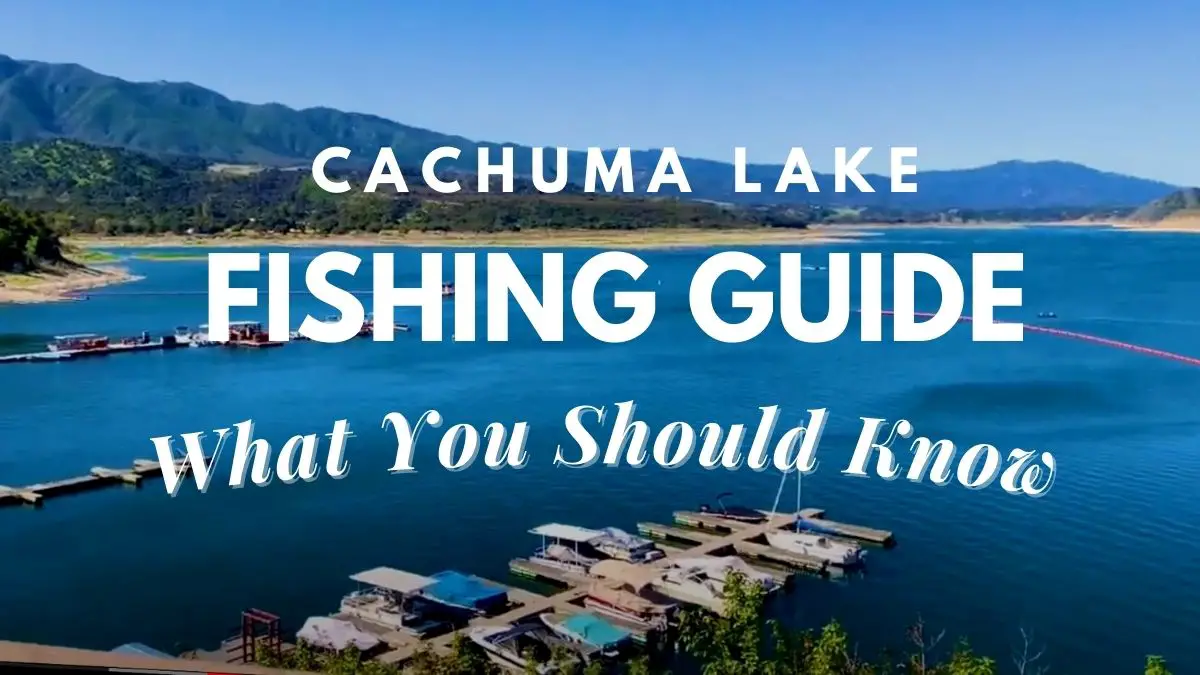
You may spend a wonderful day on the water with all you need at Apache’s marina. Stay away of the water since swimming and other water activities are prohibited here. Since there are no speedboats or water skiers around, boating here may be incredibly peaceful. Additionally, there is some fantastic fishing to be obtained. A win-win situation exists in Cachuma Lake.
There are several readily accessible shorelines all around the marina and all the way down to Jack Rabbit Flats for shore fishermen. To access the lake’s more distant areas, there are additional trekking paths all over the region. Near the marina, there are fishing piers that allow shore fishermen to go a little deeper.
When the water is colder, rainbow trout may be caught from the piers. As the water warms, bass and bluegill can also be caught from the piers.
Lodging and Camping
Around the lake, there are several camping and housing possibilities. You may book cabins, yurts, RV spaces, and regular tent camping sites. Make sure you reserve early and prepare ahead. Up to six months before your travel, you may make reservations.
There are accommodations for gatherings nearby in the form of vacation rentals. Though a little journey may be required, the nearby villages do have restaurants. At Cachuma Lake, unwind for a few days while taking advantage of some fantastic fishing chances.
How to get the most out of fishing experience
For beach fishermen, the fishing is lucrative in Harvey Cove, the marina area, and E Point, while trout fishing is often decent in the deep water near the dam or in Cachuma Bay. The areas around Arrowhead Island, Cachuma Bay, the Narrows, and Jack Rabbit Flats are among the greatest places to catch bass. Smallmouth bass seem to congregate near the dam’s ends.
The Narrows offers excellent crappie fishing for anglers. In Santa Cruz Bay and off the Loop Trail, catfish fishermen had good success. Carp bow fishing may be successful around Arrowhead Island.
Largemouth and smallmouth bass, rainbow trout, catfish, crappie, bluegills, and redear sunfish are among the species that anglers target in Cachuma Lake. The lake has just been made available for carp bowfishing. Each year from October through April, 150,000 trout are supplied at Cachuma Lake. A lot of aquatic vegetation gives fish a nice habitat.
Final words
Now you have a clear idea on how to get the most out of your Cachuma lake fishing experience. While keeping these in mind, you may go ahead and enjoy fishing. You will surely fall in love with the overall experience that comes on your way with it.

Proud owner of https://travelyouman.com/